 Trump Signal Index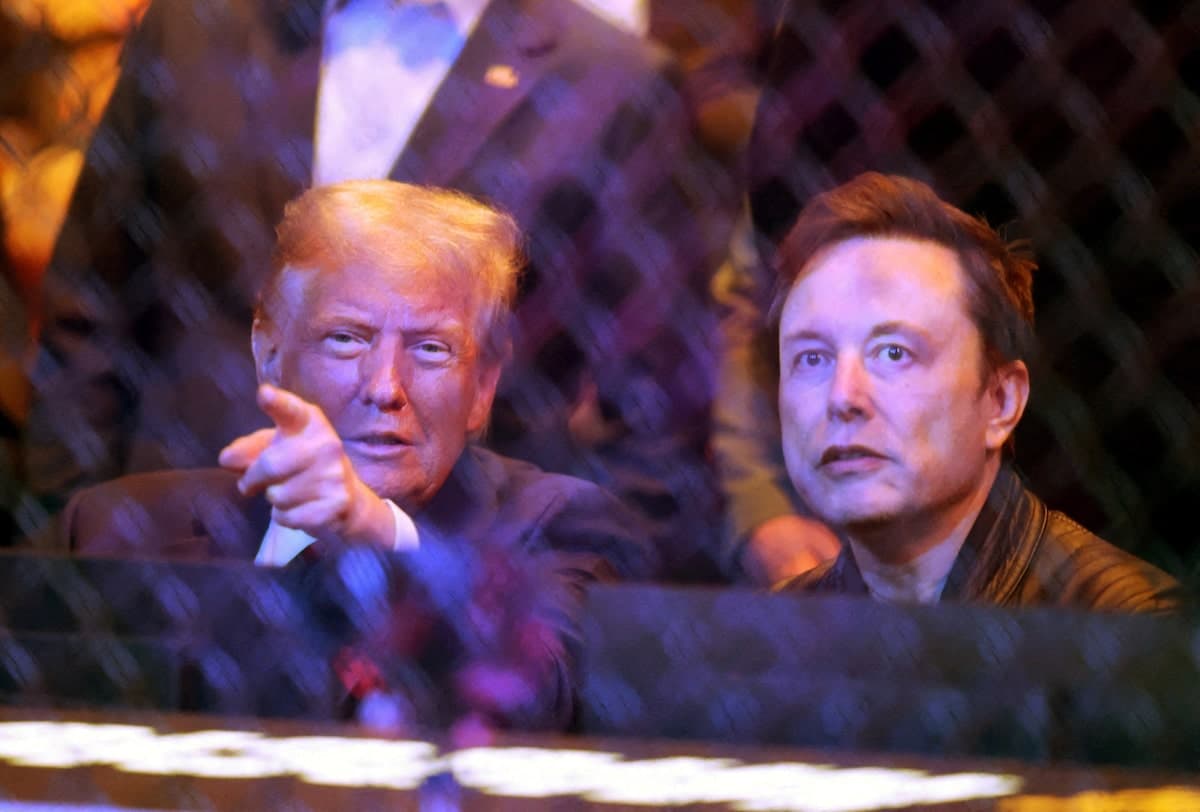
Trump didn’t just bring diplomats to Beijing. He brought Elon Musk, Tim Cook, and Larry Fink.
The CEO delegation accompanying Trump to the Xi Jinping summit is a deliberate signal about what kind of meeting this is. Trump is framing the China trip not as a heads-of-state confrontation but as a deal-making session — one where the interests of US business are literally in the room. The choice of executives is not random: Musk runs Tesla, which has its largest international factory in Shanghai. Cook runs Apple, which manufactures roughly 90% of its products in China. Fink runs BlackRock, the world’s largest asset manager, with deep exposure to Chinese capital markets.
Each of them has billions of dollars of value that depends on the outcome of this summit.
What the CEOs Bring
Elon Musk. Tesla’s Shanghai Gigafactory produces over 700,000 vehicles per year and accounts for roughly half of Tesla’s global deliveries. Musk has maintained a notably cooperative relationship with Chinese authorities — Tesla was allowed to operate as a wholly foreign-owned entity in China, a rare exception to standard joint venture requirements. His presence in Beijing signals that the Trump administration wants to preserve, not disrupt, that relationship. He also runs xAI, which has direct interest in how US-China AI technology restrictions are structured.
Tim Cook. Apple’s supply chain dependence on China is the most visible corporate exposure in the US economy. Foxconn’s Zhengzhou facility alone assembles an estimated 70% of iPhones shipped globally. Apple has been gradually diversifying to India and Vietnam, but the process takes years. Cook’s presence signals that Apple wants stability in the transition period — and that any tariff or export control changes affecting consumer electronics components will have a direct and immediate cost to US consumers.
Larry Fink. BlackRock manages roughly $10 trillion in assets. Its exposure to China includes direct investments, bond holdings, and institutional mandates tied to Chinese sovereign and corporate debt. Fink has consistently argued that financial decoupling from China is neither practical nor desirable. His inclusion in the delegation suggests the Trump administration is at minimum keeping the financial integration conversation open.
The CEO delegation converts a diplomatic summit into a business negotiation with named counterparties. Xi will know exactly what assets are in the room and what concessions would unlock them. Trump gets a visible private-sector endorsement of the deal he’s trying to close.
The Agenda Behind the Agenda
The official summit topics — trade, AI, export controls, Taiwan, the Iran war — each map directly to the business interests of the executives present.
AI and export controls are the most contested technology issue between Washington and Beijing. The US ban on selling advanced AI chips (Nvidia H100, A100) and high-end semiconductor equipment to China has cost US companies billions in lost revenue and given Chinese firms incentive to build domestic alternatives. Musk’s xAI and Apple’s on-device AI ambitions both intersect with how these controls are structured.
Rare earth exports affect every company in the delegation. China controls roughly 90% of global rare earth processing capacity. In recent months, Beijing has signaled willingness to restrict exports as a retaliatory lever against US tech sanctions. Any agreement that secures rare earth supply chains — for electric vehicles, smartphones, and financial data infrastructure alike — would be a direct win for Musk, Cook, and Fink’s balance sheets.
Taiwan is the implicit risk that none of the executives can price. A military confrontation in the Taiwan Strait would immediately sever the supply chains that the Cook delegation depends on. That Apple manufactures almost nothing in Taiwan itself is irrelevant — TSMC, which fabricates Apple’s A-series and M-series chips, is headquartered there. Every iPhone sold depends on the Taiwan Strait remaining open.
The CEO delegation creates a specific political dynamic: if the summit fails to produce substantive agreements, the executives who flew to Beijing with Trump return empty-handed and their shareholders notice. That creates pressure on both sides to deliver at least a visible deliverable — a tariff pause, an export control carve-out, a joint AI working group — before the press conference.
The Counter-Reading
There is a version of this story where the CEO delegation is theater rather than substance. Trump has a pattern of staging high-visibility business events that generate market reactions without producing durable policy changes. The presence of Musk, Cook, and Fink guarantees headlines. It does not guarantee a deal.
China also has its own negotiating constraints. Agreeing to visible concessions under US pressure — particularly on AI technology and Taiwan — carries domestic political costs for Xi. The Chinese public and the Communist Party’s internal factions are watching. A summit that looks like Xi capitulated to a US business delegation is harder to sell domestically than one that looks like an equal partnership.
The most likely outcome is somewhere between the bull and bear cases: a joint statement with enough specificity to move markets, and enough ambiguity to let both sides claim a win.
Apple China revenue (FY2025)
~$67B
Tesla Shanghai annual output
~700K vehicles
BlackRock AUM
~$10T
China rare earth processing share
~90%