 Trump Signal Index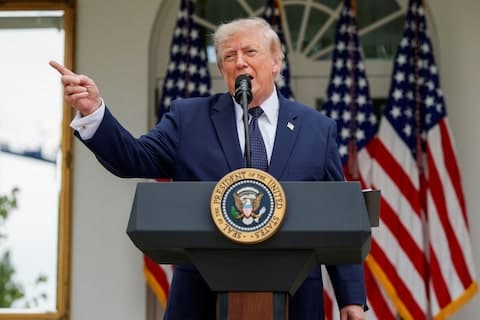
At the White House on July 6, Trump said: “We’re going to make a deal, or we’re going to finish things.” He added that finishing would “not be that hard” — that the US could destroy Iranian bridges and cut off energy supplies within an hour. He then said he would prefer a deal because he doesn’t want to affect 91 million Iranians.
This is the same dual-track message Trump has used throughout the Iran negotiation: maximum threat, genuine deal preference, stated in the same breath. The formula has been consistent since May. What has changed is the context in which it is being delivered.
Khamenei is dead. His funeral was the backdrop for this exchange.
Iran’s Two Responses Reflect Its Internal Split
The Iranian reply came from two different voices with two different registers, and the difference matters.
Mohammad Baqer Zolqadr, secretary of Iran’s Supreme National Security Council, called Trump’s statement a “delusion” and told him to “speak with respect or we will respond in another language.” This is the hardline register: dismissive, confrontational, framing Trump as irrational.
Abbas Araghchi, Foreign Minister and the lead negotiator representing the pragmatist faction, posted on X that “if threats continue, final agreement negotiations will not begin.” This is a specific, calibrated diplomatic warning — not a dismissal, but a conditional: the threats are the variable that determines whether the next phase of talks opens.
These are not the same message delivered twice. Zolqadr and Araghchi are representing different internal constituencies. Zolqadr speaks for the IRGC-adjacent security establishment. Araghchi speaks for Pezeshkian’s reformist-pragmatist coalition. That both felt the need to respond — in different tones — indicates that Trump’s July 6 statement landed as a real complication inside Iran’s negotiating posture, not just rhetorical noise to be ignored.
Araghchi’s specific warning that threats will prevent final agreement negotiations from starting is the most consequential statement in this exchange. The MOU signed on June 19 was a framework. The binding nuclear and sanctions agreements require a second round of formal negotiations. Araghchi is saying that round may not open if Trump’s public posture continues. This is not boilerplate — it is a traceable condition.
Khamenei’s Death Changes the Negotiating Math
Ayatollah Khamenei was the supreme authority who, in the Iranian system, could authorize the kind of compromise that makes a US nuclear deal possible domestically. The JCPOA was possible in 2015 partly because Khamenei gave Rouhani’s negotiating team permission to proceed — and then sustained that permission against hardliner pressure.
Khamenei is now gone. The transition period before a new supreme leader is confirmed is historically the moment in Iranian politics when hardliners exert maximum pressure. Appearing to capitulate to US threats during a period of national mourning and power transition is politically suicidal for any Iranian leader or faction.
Whoever succeeds Khamenei — whether through the Assembly of Experts or a more contested process — will face an immediate legitimacy test. Standing firm against American pressure is the most visible way to establish that legitimacy. The political cost of showing flexibility toward Washington has never been higher, at exactly the moment when the final nuclear deal negotiations are supposed to begin.
Trump’s July 6 statement — delivered into this exact moment — strengthens every Iranian argument against resuming talks. It gives Araghchi’s domestic critics ammunition. It gives Zolqadr’s faction grounds to claim that the pragmatists’ engagement strategy has not produced respect or de-escalation.
The Frozen Assets Contradiction
Trump said the US has not given Iran a dollar. Earlier accounts — including the June 23 reporting on the escrow structure — described two tranches of $6 billion ($12 billion total) in frozen assets moving toward release, with OFAC general licenses being issued for Iranian oil by August 21.
Either the escrow release has not materialized as reported, or Trump is using “we haven’t given them a dollar” as a political framing that is technically accurate about direct transfers while eliding the escrow process. The distinction matters because Iran’s negotiating team is expecting that $12 billion as part of the MOU’s near-term implementation. If the money is not flowing, or is perceived as being withheld as additional leverage, that is itself a source of deal-breaking friction.
The combination of Khamenei’s death, Trump’s continued public threats, and uncertainty about frozen asset release creates the highest-risk moment for the MOU framework since it was signed on June 19. The 60-day window Trump referenced is narrowing. If the final agreement negotiations have not begun by the time that window closes, Trump’s stated options include toll collection on Hormuz and resumed military action — both of which would re-open the oil risk premium that markets have spent three weeks pricing out.
What the “Finish It” Option Actually Means
Trump’s bridge-and-energy-supply language is worth reading literally. Destroying Iranian infrastructure — bridges, power generation, fuel distribution — is not the same military operation as the targeted strikes already conducted. It is a shift toward systematic degradation of civilian infrastructure, which carries a different legal and humanitarian profile and would produce a very different international response than the June operations.
The threat is probably not an imminent plan. It functions, like most Trump military threats in this negotiation, as pressure to accelerate Iranian compliance. But the specificity of “bridges within an hour” is new. Previous threats focused on nuclear sites, military targets, and oil infrastructure. Civilian infrastructure threats have a different escalation implication.
MOU signed
June 19, 2026
Khamenei death
During final agreement negotiation window
Araghchi condition
No talks if threats continue
Frozen assets status
Trump: ‘Not a dollar given’
60-day window remaining
Narrowing