 Trump Signal Index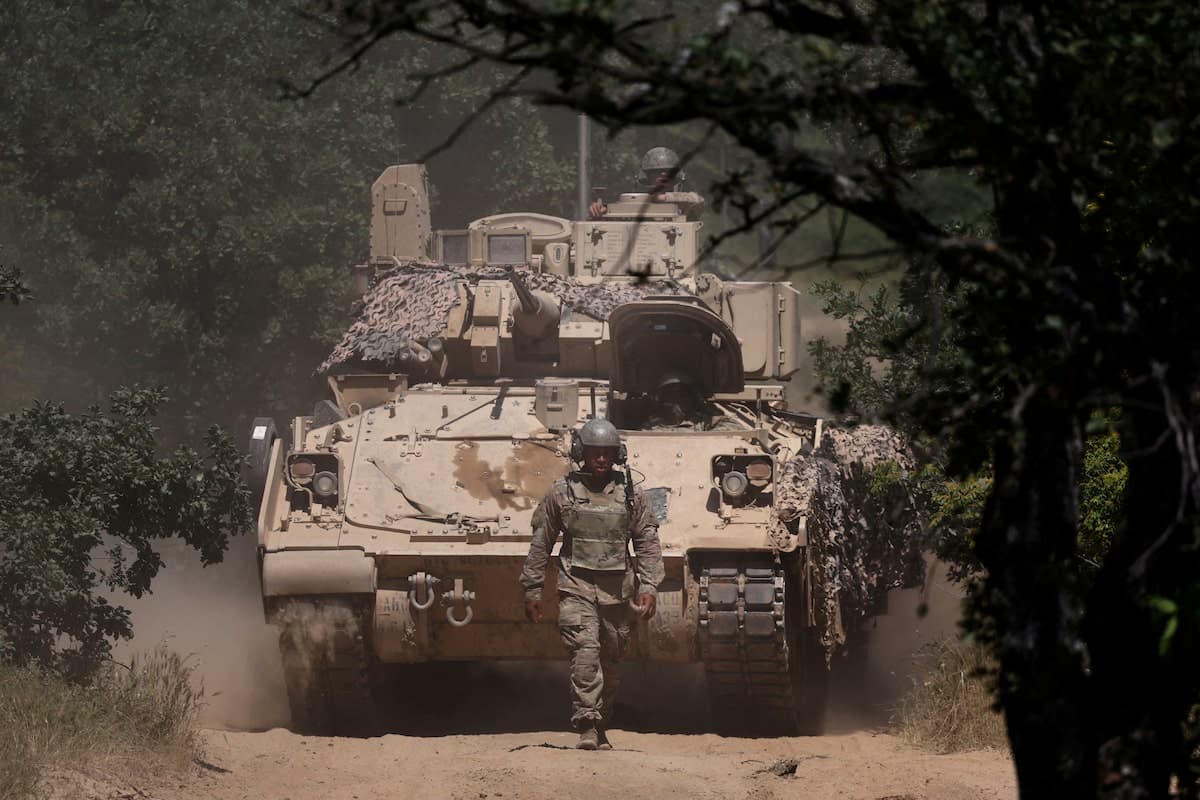
Trump confirmed on May 4 that the US troop drawdown from Germany will exceed 5,000 — substantially more than the figure reported when the initial announcement was made. The Pentagon, citing a Defense Department official to CBS News, indicated that a portion of the withdrawing troops will return to the US first, then redeploy to the Indo-Pacific and other priority theaters. The statement was not an announcement of specific numbers. It was a declaration of strategic direction.
Why Germany Is Not Just About Germany
The 40-plus US military installations in Germany are not forward bases for defending German territory. They are the logistical backbone of America's global power projection capability. EUCOM and AFRICOM — the commands responsible for Europe and Africa respectively — are both headquartered on German soil. The facilities support Atlantic submarine tracking operations, rapid-reaction forces for Middle East and Africa interventions, ballistic missile early warning systems, and signals intelligence collection across a wide geographic arc.
Reducing the German footprint does not just affect European security. It degrades the infrastructure through which the US conducts operations across three continents simultaneously.
The Indo-Pacific Reallocation Signal
The Pentagon statement about Indo-Pacific redeployment is the most significant line in the reporting. It confirms what strategic analysts have been arguing since the Iran War began: the US military is overextended across the Middle East, Europe, and Asia simultaneously, and choices are being made about where to concentrate.
The Indo-Pacific priority means China. The redeployment of Germany-based forces toward Asia is a structural acknowledgment that the People's Liberation Army — not Russian ground forces or Iranian naval assets — is the military planning priority for the next decade.
The Germany cuts are not primarily about punishing Europe for sitting out the Iran War. They are about freeing up forces for the China deterrence mission in the Pacific. Europe is the budget line being cut to fund the larger strategic competition.
Korea Is Already in the Conversation
US-Korea "alliance modernization" talks — described by officials as addressing the role and responsibility structure of US Forces Korea — are running in parallel. The language of "modernization" is diplomatic cover for the same logic being applied in Germany: Trump expects allies to carry more of the burden, and the baseline US commitment is being recalibrated based on the ally's willingness to pay.
South Korea is not in the same position as Germany. It contributes significantly to host nation support costs and faces a direct military threat from North Korea that makes US presence existential to Korean security planners. But the Germany decision makes explicit that no alliance commitment is permanent under the current administration. Every ally is now doing the same calculation: what do I need to do to keep American forces on my soil?
The Message to Every US Ally
The practical consequence of the Germany announcement is not the troop numbers. It is the signal it sends to every country that hosts US forces or depends on US security guarantees. Trump has now demonstrated twice — first with Ukraine, then with Germany — that the architecture of post-WWII alliances is subject to renegotiation on his terms.
Australia, Japan, the Philippines, and the Gulf states are all watching. Each is calculating how much it would cost to make itself indispensable to US strategic interests — and whether that calculation is affordable.
For South Korea, the "alliance modernization" framing is particularly sensitive. Any reduction in US Forces Korea changes the military balance on the peninsula in ways that cannot be quickly reversed. The conversation is not yet public, but it is happening.
Defense Sector Implications
The structural reallocation of US forces toward the Indo-Pacific is a long-term procurement signal. The systems required for Pacific deterrence — carrier strike groups, long-range strike aircraft, submarine forces, missile defense networks — are different from the armored divisions and air defense batteries optimized for European ground war. Defense contractors positioned in naval, aerospace, and precision strike will benefit from the strategic pivot. Ground-force equipment manufacturers face a more uncertain outlook.
European defense spending, meanwhile, is being forced higher regardless of what the US ultimately does. Germany has already committed to 3% of GDP. The announcement of further cuts accelerates the timeline for European strategic autonomy — whether European governments want to pursue it or not.