 Trump Signal Index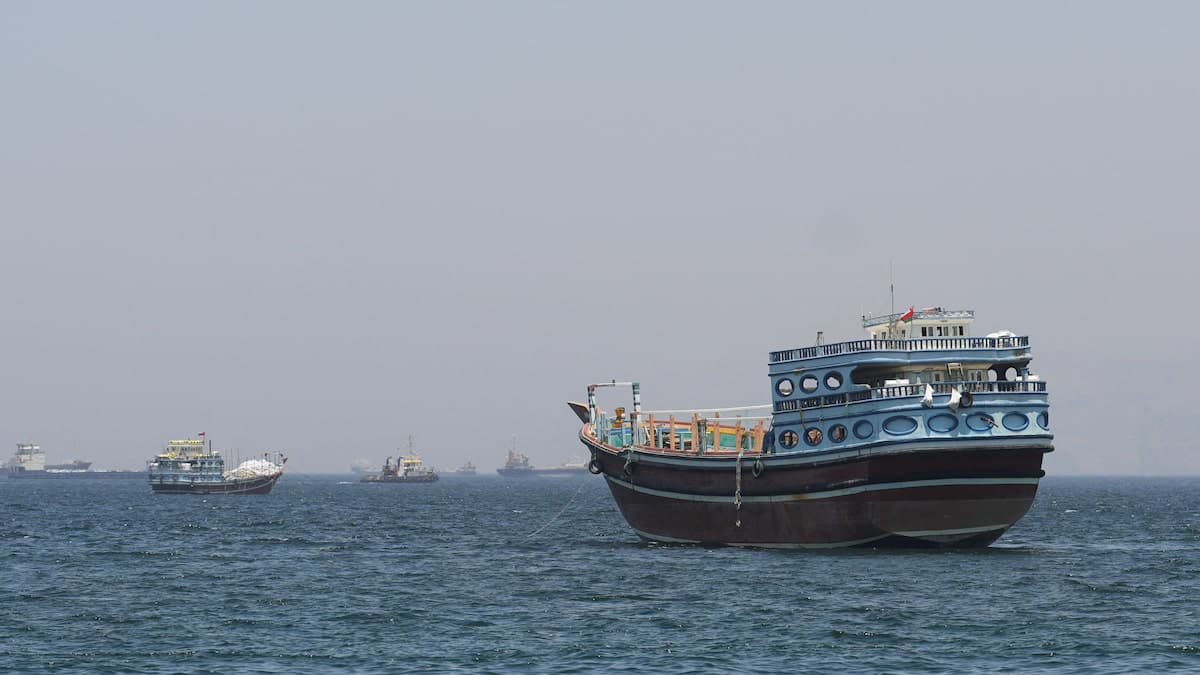
Trump announced on May 4 (Middle East local time) that the United States is launching "Operation Freedom" — a naval escort and rescue mission to extract trapped commercial vessels from the Strait of Hormuz. Multiple countries had requested US assistance to free their ships. Trump said he personally ordered the operation and warned that any Iranian attempt to interfere would be met with a "powerful response."
The operation changes the strategic character of the Hormuz situation in a significant way.
What Operation Freedom Actually Is
The blockade Iran imposed on the Strait of Hormuz — which the US Navy has enforced by preventing Iranian vessels from clearing mines and allowing commercial traffic — has left dozens of third-party ships anchored in the strait or at its approaches. These vessels are not American. They belong to countries that have no direct stake in the US-Iran conflict but whose commerce depends on the Hormuz passage.
Operation Freedom is, in essence, a naval convoy system. US warships will escort commercial vessels through the strait, providing protection against Iranian interdiction. The historical reference is unmistakable — it mirrors the 1987-1988 Earnest Will operation, in which the US reflagged Kuwaiti tankers and escorted them through the Gulf during the Iran-Iraq War.
The difference is the scale of the current blockade and the direct US military involvement against Iranian naval assets already in place.
Why This Is a Strategic Shift
The Hormuz blockade, as it has operated until now, was primarily a tool of economic pressure on Iran. Ships weren't moving, oil wasn't flowing, and the goal was to increase the economic pain on Tehran until it agreed to nuclear terms.
Operation Freedom introduces a new variable: third-party nations are now formally requesting US military protection in a contested waterway. This gives the operation a multilateral legitimacy — the US is not acting unilaterally to advance its own interests, but responding to requests from countries whose ships are trapped. That framing matters diplomatically.
It also increases the probability of a direct incident. Every convoy escort is a potential confrontation with Iranian naval forces. One miscalculation — an Iranian fast boat that gets too close, a mine that a convoy triggers — becomes a military incident rather than a blockade enforcement action.
The operation's warning — "any interference will be met with a powerful response" — is a direct deterrence statement aimed at Iranian commanders. It raises the stakes of any Iranian attempt to interdict the convoys and forces Tehran into a binary choice: let the ships leave, or escalate to open confrontation with US forces.
Iran's Position
Iran has not formally responded to the Operation Freedom announcement as of this writing. Its options are constrained. Allowing the convoys to proceed unmolested undermines the blockade's effectiveness — if ships can leave with US escort, the economic pressure on global trade routes eases. Attempting to interdict US-escorted vessels risks a direct military exchange with the US Navy in a confined waterway.
The nuclear talks are effectively suspended. Iran's position — ceasefire first, nuclear discussions second — remains incompatible with Trump's sequencing. Operation Freedom does not resolve that gap. It changes the military facts on the water while the diplomatic situation remains deadlocked.
Oil Price Implications
The announcement had an immediate directional effect on oil markets. If Operation Freedom successfully escorts vessels out of the strait, it partially reopens the shipping lane that has been functionally closed — reducing the supply disruption premium that has kept Brent near $126.
The scale of relief depends on how many vessels can be escorted, how frequently convoys can run, and whether Iran attempts interference. A single successful convoy does not reopen Hormuz. A sustained operation that establishes regular passage begins to change the market's assessment of the blockade's permanence.
Blockade Duration
Ongoing
No ceasefire in place
Operation Start
May 4 (ME)
Middle East local time
Nations Requesting Help
Dozens
Third-party vessels trapped
Iran Response
Pending
No formal statement yet
What to Watch
The next 48–72 hours are the key window. If the first convoys pass through without Iranian interference, it establishes a precedent that the US can enforce passage and Iran will not risk escalation. If Iran attempts to interdict — with fast boats, mines, or air assets — the conflict enters a new phase.
The "powerful response" warning is not a bluff Trump can walk back easily. A US naval escort that gets fired on and does not respond would collapse the deterrence architecture the operation is designed to establish. The military logic locks both sides into a position where backing down is costly.
For markets, the operation is net positive if it succeeds — lower oil prices, restored shipping confidence, reduced conflict premium. It is significantly negative if it triggers an incident, because the next escalation step from a US-Iranian naval exchange has no clear ceiling.