 Trump Signal Index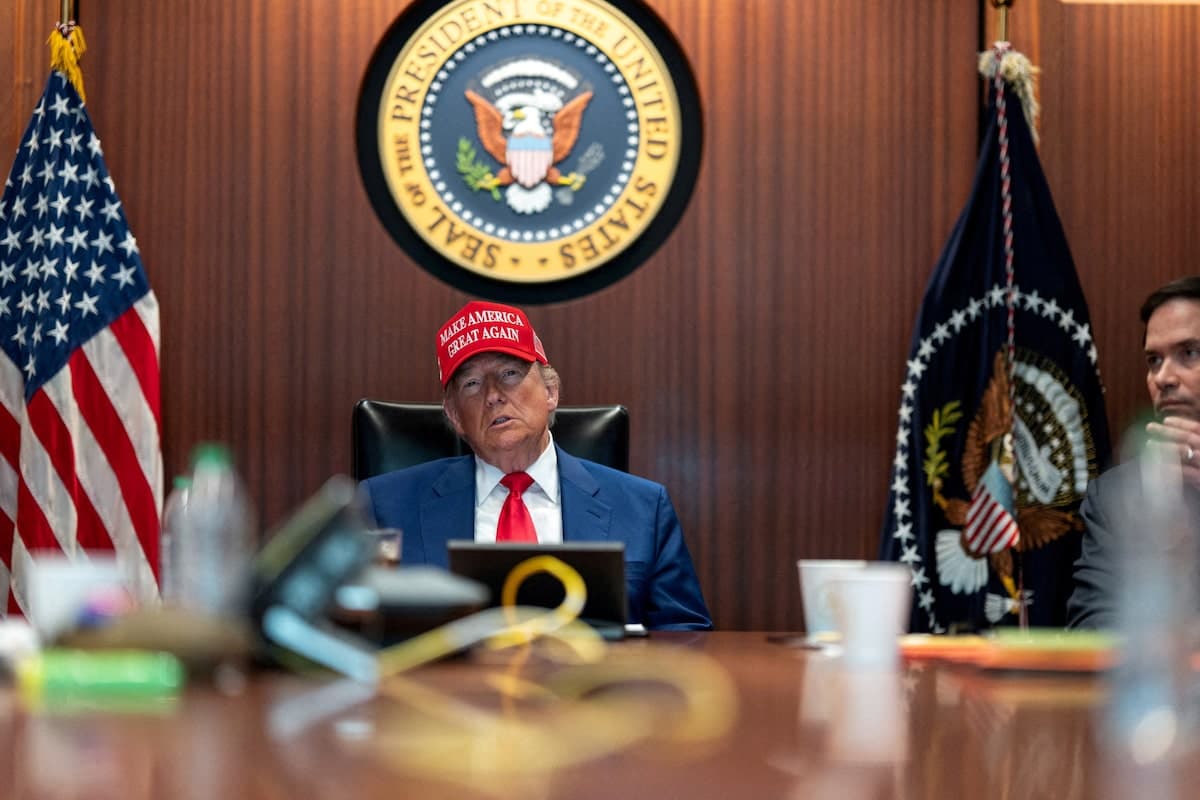
Trump was asked directly on May 5 whether the United States is planning an imminent military strike on Iran. He declined to answer. Not a denial. Not a confirmation. A deliberate silence.
In the context of everything that has happened over the past two weeks — the CENTCOM briefing, Operation Freedom, the refinery sanctions on China, the wartime Beijing visit — that non-answer is the most significant statement Trump could make short of ordering the strike itself.
Why Non-Denial Is a Market Signal
Trump's communication style has been studied closely enough by markets that the pattern is now legible. When he wants to rule something out, he rules it out loudly. "We are not going to do X" is a sentence he uses frequently. When he declines to rule something out, it is because the option is live.
The CENTCOM briefing on April 30 — 45 minutes with the commander of US forces in the Middle East and the Chairman of the Joint Chiefs — was not a routine update. It was a decision-preparation session. The Beijing visit, which began with simultaneous sanctions on Chinese oil refineries, is happening against a backdrop of diplomatic failure: the War Powers Act deadline passed without a deal, the Islamabad talks collapsed, and Iran rejected the sequencing of Trump's peace conditions.
The conditions for a military strike are now assembled in a way they weren't three weeks ago.
Trump's refusal to deny an imminent strike is the highest-probability pre-strike signal his communication pattern produces. He does not telegraph attacks in advance — but he also does not lie when asked directly about something that is already decided. Silence is the tell.
What a Strike Would and Would Not Accomplish
The military options on the table — described in the CENTCOM briefing as "short and powerful" — are designed to hit Iran's nuclear infrastructure, not to occupy territory or change the regime. The logic is coercive: destroy enough of the nuclear program to reset the timeline by years and demonstrate that the cost of non-compliance exceeds the cost of a deal.
What a strike would not accomplish is resolving the Hormuz situation. Iran's mine-laying capability and its ability to threaten the strait with shore-based missiles does not depend on the nuclear sites. A strike might kill the nuclear program and leave the blockade intact — forcing a separate negotiation over the waterway under conditions of even greater hostility.
The counterargument is that a successful strike changes Iran's negotiating calculus entirely. A government that has just had its nuclear infrastructure destroyed and is facing an open-ended US military blockade may calculate differently about the value of nuclear concessions than a government that still has the program.
The Beijing Timing
Trump is in Beijing — or preparing to go — while simultaneously declining to deny an imminent strike on Iran. The diplomatic implication is significant. A US strike on Iran during or immediately after a Trump-Xi summit would define the summit's legacy regardless of what was agreed.
Two interpretations are possible. The first: Trump is using the Beijing summit as leverage — signaling to China that if it does not agree to stop buying Iranian oil, the US will simply destroy what the oil revenues are funding, making the question moot. The second: the strike decision has already been made, and the Beijing visit is meant to inform rather than consult.
If a strike occurs, the first market reaction will be in oil — a sharp spike as traders price in Iranian retaliation against shipping. The second reaction will depend on whether Iran retaliates and how. A strike without Iranian retaliation would likely see oil give back gains quickly. A strike with retaliation extends and escalates everything.
What Markets Are Pricing
The Trump Signal Index has been elevated for two weeks. Markets have been pricing in sustained military risk — the $126 Brent price reflects that. What markets have not yet fully priced in is a discrete strike event, because discrete strike events are harder to model than sustained blockade conditions.
A confirmed strike announcement would trigger an immediate oil spike, a flight to gold and defense, and a sell-off in financials and transport. The size of those moves depends on the scale of the strike and Iran's response in the first 24 hours.
The non-denial on May 5 is the last warning before that scenario becomes a reality.