 Trump Signal Index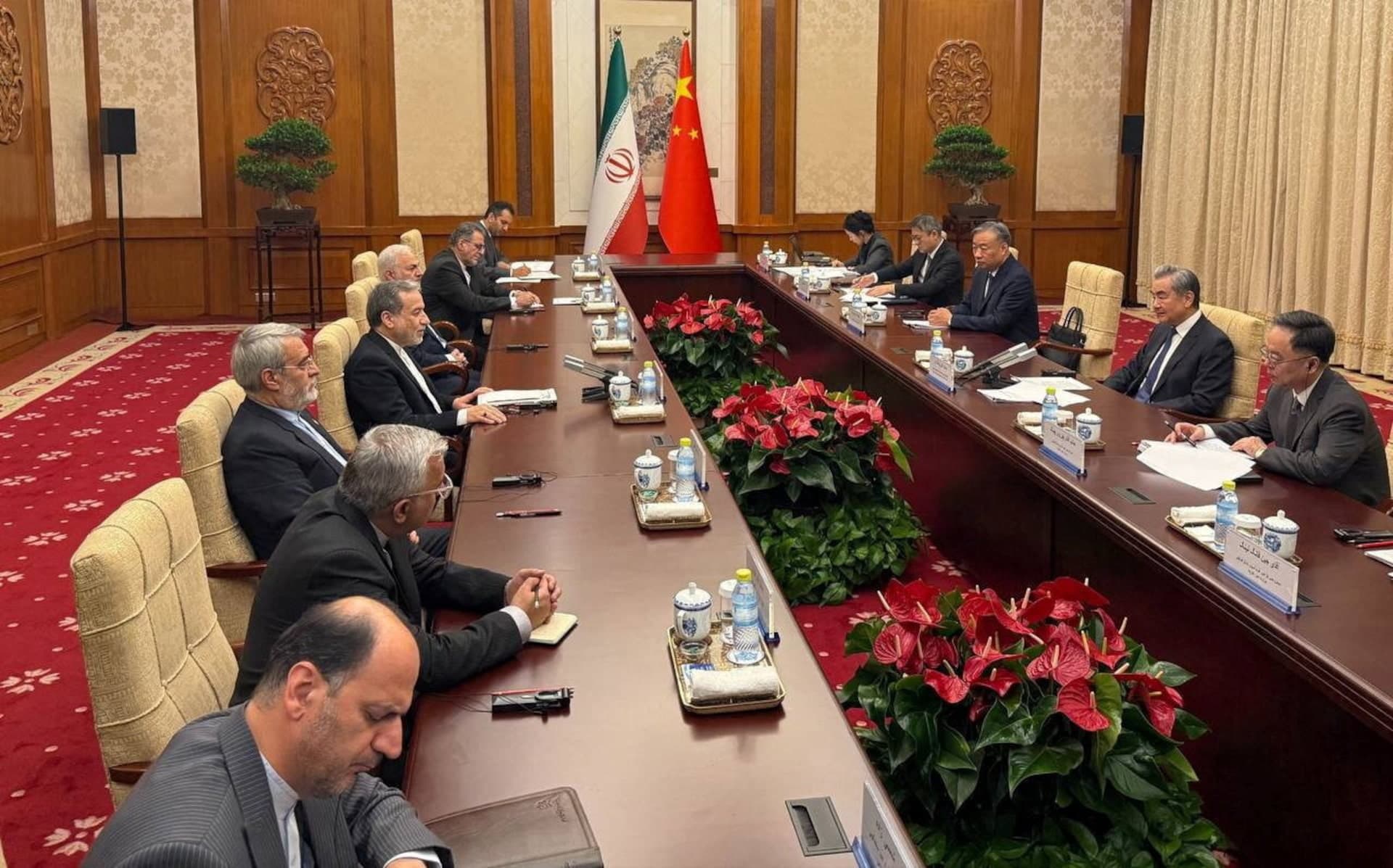
Iranian Foreign Minister Araghchi arrived in Beijing and held a formal bilateral meeting with Chinese Foreign Minister Wang Yi on May 7. It was the first official diplomatic meeting between the two countries' foreign ministers since the Iran War began. The timing — days before Trump's wartime summit with Xi — was not accidental.
Wang Yi said a full ceasefire is "urgently needed" and that resuming the war would be "undesirable." Araghchi thanked China for its position and said, in public remarks, that negotiations to end the war have begun. Both statements were carefully calibrated. Neither confirmed a deal. Both confirmed that China is now actively in the middle of the process.
What China's Mediation Position Means
China has been Iran's primary economic lifeline throughout the conflict — buying discounted oil, providing political cover at the UN, and issuing an executive order telling domestic companies to ignore US secondary sanctions. That role made Beijing an interested party, not a neutral mediator.
The shift happening now is that China is converting its economic leverage into diplomatic positioning. By hosting Araghchi days before Trump arrives in Beijing, Wang Yi is establishing China as the broker that both sides need to go through to reach a deal. Iran came to Beijing because it has no other major-power patron willing to publicly advocate for a ceasefire. China accepted the meeting because mediating the end of a Middle East war — on its terms — is a strategic prize.
China's mediation is not neutral. Every framework Beijing shapes will be designed to preserve Iranian oil flows, minimize US strategic gains, and position China as the indispensable power in the region. A ceasefire brokered by China looks different from a ceasefire imposed by Washington.
The Taiwan Equation
The subtext of the Beijing summit — and of Araghchi's visit immediately preceding it — is the potential for a larger deal that links the Iran War to the Taiwan question. Trump has signaled, and Chinese officials have acknowledged privately, that US posture on Taiwan is a negotiable variable in the broader US-China relationship.
The structure of a grand bargain is theoretically available: China pushes Iran to accept Trump's nuclear terms, US eases pressure on Taiwan, both sides declare a win. The obstacle is that Taiwan is a domestic political third rail in both Washington and Beijing — any deal that appears to trade Taiwan security for Middle East peace faces enormous resistance from within the US government and from US allies in Asia.
Whether Trump is willing to go there, and whether Xi thinks the offer is real, is the unanswered question hanging over the Beijing summit.
Araghchi's Public Confirmation
The most significant statement from the Beijing meeting is Araghchi's acknowledgment that "negotiations to end the war have begun." Combined with the Axios report of a 14-point MOU framework, this is the first time Iran has publicly confirmed active ceasefire negotiations rather than conditions for potential talks.
Iran's domestic politics constrain what Araghchi can say. Publicly acknowledging that negotiations are underway — while standing next to China's foreign minister — is a way of framing the process as multilateral rather than a bilateral capitulation to US pressure. China's presence gives Iran diplomatic cover to negotiate without appearing to simply surrender to Trump's terms.
The Three-Way Dynamic Before the Summit
The days leading into Trump's Beijing visit now have a specific diplomatic geometry:
- Iran flew its foreign minister to Beijing to secure Chinese backing before Trump arrives
- China positioned itself as the essential mediator, with leverage over both sides
- The US is holding a 14-point MOU framework and a military strike option simultaneously
This is not a situation where one party is in control. Trump can offer the MOU or the strike. China can facilitate or obstruct. Iran can accept terms or gamble that Chinese protection provides enough cover to hold out longer.
The Beijing summit is now, functionally, a three-party negotiation about the Iran War — with Taiwan as the unstated side agenda.
Araghchi confirming that "negotiations have begun" is the first public Iranian statement that goes beyond conditions-setting. It is a significant rhetorical shift. Whether it reflects a genuine change in Iran's bottom line — or is designed to give China something to work with in the Trump summit — will become clear in the next 72 hours.
Market Read
The combination of the MOU report (May 6) and the Araghchi-Wang Yi meeting (May 7) represents the most concentrated de-escalation signaling since the war began. Oil markets will read this as a genuine shift in probability — the chance of a ceasefire in the near term is materially higher today than it was a week ago.
The risk is that this sequence is pre-summit positioning rather than actual convergence. If the Trump-Xi summit produces no agreement on Iran, both the MOU and the Araghchi visit will be reframed as failed diplomatic theater — and the military option that Trump declined to deny on May 5 comes back to the front of the queue.