 Trump Signal Index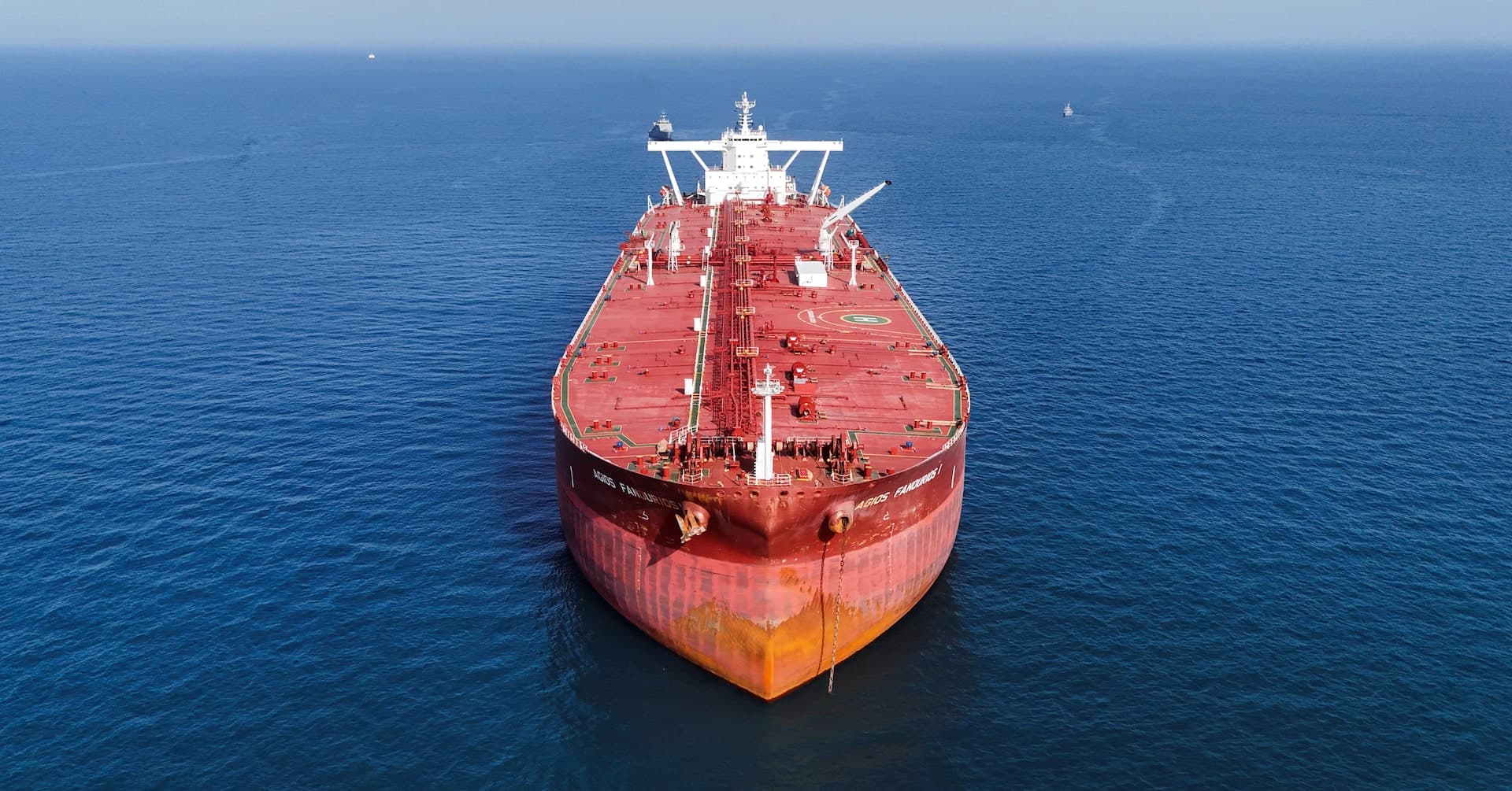
The IRGC Navy published a statement on May 20 announcing that 26 ships had passed through the Strait of Hormuz in the preceding 24 hours. Tankers, container ships, and commercial vessels. All of them, the statement said, passed “under IRGC Navy coordination and security support.” All transits, it added, required “prior authorization and close cooperation” with the IRGC.
This is not a blockade announcement. It is the opposite. Iran is describing itself as the operational authority over one of the world’s most critical maritime chokepoints — and presenting ship passages as evidence of that authority in practice.
South Korea’s Foreign Minister Cho Hyun confirmed at a parliamentary session the same day that a South Korean tanker was among those transiting. The minister’s framing: “our tanker is exiting through Hormuz through coordination with Iran.” Seoul negotiated passage directly with the IRGC.
The Shift From Blockade to Toll Booth
Since the war began on February 28, Hormuz has been characterized in Western reporting as a blockade — Iran closing the strait to pressure the US and its allies. The IRGC’s statement reframes that characterization entirely.
A blockade is a binary posture: ships pass or they don’t. A permission system is a governance structure. Iran is now asserting that passage through Hormuz is available — to those who coordinate with the IRGC and obtain prior authorization. The strait is open. It is open on Iran’s terms.
The legal significance of that distinction is immediate. The Strait of Hormuz falls under the United Nations Convention on the Law of the Sea (UNCLOS) Article 38, which guarantees the right of transit passage through international straits. No coastal state can require prior authorization for innocent passage. Iran’s announcement — requiring ships to obtain IRGC permission before transiting — is a direct violation of that framework.
But UNCLOS violations require enforcement. The US Sixth Fleet can assert transit rights by force. Every other nation’s merchant fleet is doing a different calculation.
South Korea’s direct coordination with the IRGC to secure passage for a commercial tanker is the most significant data point in this story. Seoul is a US treaty ally. Its decision to negotiate separately with Iran — rather than asserting transit rights or waiting for US naval escort — demonstrates that the permission system is already producing bilateral deals, country by country, around the US-led enforcement framework.
Who Is Complying and What That Means
The 26 ships that passed in 24 hours did not simply sail through. They coordinated with the IRGC first.
This means carriers and their flag states are making an economic calculation: the cost of IRGC coordination (time, data disclosure about cargo and destination, whatever fee or concession Iran is extracting) is lower than the cost of rerouting around the strait or waiting for US naval escort. At $109 per barrel and counting, every day of delay is expensive. Compliance with Iran’s permission system is the rational short-term choice for individual shipping operators.
That individual rationality is undermining the collective enforcement posture the US is trying to maintain. If ships coordinate with the IRGC regardless of US policy, Iran earns two things: revenue from whatever it extracts as the price of passage, and legitimacy — a de facto acknowledgment that IRGC authorization is a functional requirement for Hormuz transit.
Iran has separately indicated it intends to collect transit fees from civilian vessels passing through the strait. The 26-ship statement does not confirm fees were collected. But the permission architecture is now in place. The monetization step follows.
Every bilateral coordination deal between a foreign ship operator and the IRGC strengthens Iran’s de facto sovereignty claim over Hormuz. The accumulation of 26 such passages in a single day — including from a US treaty ally — is evidence that the permission system is already operational, regardless of what international law or US naval presence nominally requires.
The Warning Attached to the Passage Announcement
The IRGC did not release the 26-ship statement as a goodwill signal. It attached a threat.
The statement warned that if the US and Israel resume military operations, the war will expand “beyond the Middle East region.” The IRGC’s specific framing: “they have deployed all capabilities of the world’s two most expensive militaries against us, but we have not yet deployed all of the Islamic Revolution’s potential capabilities against them.”
The threat of geographic expansion is not new — Iran has made it before. What is new is the pairing. Iran is simultaneously demonstrating functional control over Hormuz (26 ships, prior authorization required, South Korea complying) and warning that any military resumption will produce a response beyond the current theater.
The combination is a negotiating position. Iran is showing it can run Hormuz as a managed system — implying the system could be normalized into a permanent arrangement — while making clear that disruption of that arrangement triggers escalation the US has not yet fully priced.
Trump responded the same day that the war will end “very quickly, in a very good way.” He said the US will not allow Iran to have nuclear weapons.
Those two statements — Trump’s confidence and the IRGC’s “we haven’t used everything yet” — describe the same standoff from opposite directions.
The Market Implication
Hormuz handling approximately 20% of global oil trade on a permission-system basis is a different risk scenario than Hormuz on a blockade basis.
A blockade implies binary resolution: either the strait reopens fully or it doesn’t. A permission system implies indefinite managed friction — ships pass, but the passage is conditional, extractable, and subject to revocation. That structure is harder to price out of the market. It does not resolve when a deal is struck. It resolves when the underlying governance authority over the strait changes.
Brent above $109 has priced in prolonged disruption. The permission system is not a normalization that pulls that risk premium down. It is an institutionalization of the disruption — which keeps the premium elevated and adds a new variable: the stability of IRGC authorization as a reliable mechanism versus the risk that authorization is withdrawn without warning.
Ships transited in 24 hours
26
Required
IRGC prior authorization
US treaty ally complying
South Korea
Hormuz share of global oil trade
~20%