 Trump Signal Index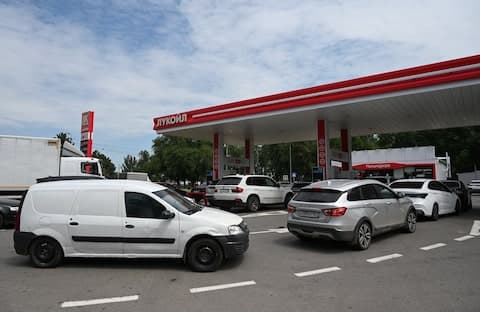
In March, when the Iran war pushed crude above $126 a barrel and US gas prices were climbing toward $4.56 a gallon, Trump said military operations were more important than the price of gas.
On June 24, with crude below $80 and gas at $3.93, Trump posted to Truth Social that major oil companies were price gouging consumers by not passing along the drop fast enough — and directed the DOJ to “immediately look into it.”
No specific targets were named. No legal basis was cited. No scope was defined.
The crude-to-retail gap Trump is attacking is real. The economics of why it exists are more complicated than the Truth Social post suggests, and the legal theory behind an DOJ investigation is unclear. But the political logic is straightforward: midterms are approaching, consumer prices are a primary economic grievance, and oil companies are a more convenient target than the upstream causes of the price spread.
The Actual Numbers
Crude oil peaked at approximately $126 per barrel during the height of the Hormuz crisis. It has since fallen to below $80 — a decline of roughly 37 percent from peak.
US average retail gasoline is at $3.93 per gallon, down from $4.56 last month — a 14 percent decline.
The gap between a 37 percent crude decline and a 14 percent retail decline is what Trump is characterizing as gouging. He is describing a real phenomenon. The characterization of it as corporate theft is where the economics diverge from the narrative.
Why Retail Gas Prices Don’t Track Crude 1:1
Energy economists have a name for the asymmetric price transmission Trump is describing: “rockets and feathers.” Retail gas prices rise quickly when crude rises (like a rocket) and fall slowly when crude falls (like a feather). The pattern is consistent, well-documented, and has multiple structural explanations.
Refining margins: Between crude oil and the pump sits a refining step. Refiners hedge their feedstock costs and lock in supply contracts — meaning the crude they are processing today was purchased at different prices than today’s spot market. Falling spot prices take weeks to work through the refinery’s actual cost basis.
Retail inventory: Gas stations carry physical inventory purchased at earlier prices. A station owner who bought gasoline at $4.20/gallon wholesale will not sell it at a loss simply because spot wholesale has moved lower. The inventory turns over; prices follow with a lag.
Taxes: Federal and state gas taxes are fixed per gallon, not percentage-based. As crude falls, the fixed tax becomes a larger share of the total price, compressing how much of the crude decline can be reflected at the pump.
None of this constitutes price gouging in any conventional antitrust sense. It is the normal mechanics of a multi-step supply chain with physical inventory, hedged contracts, and fixed cost components.
Trump’s DOJ investigation has no obvious legal theory. Antitrust enforcement requires evidence of price-fixing or market allocation between competitors — not evidence that prices fall slowly. The investigation may be intended to generate pressure and headlines rather than produce charges. Oil company stocks will respond to the headline regardless of the legal substance.
The Political Timing Is the Actual Story
Trump’s stance on gas prices has followed political incentives precisely.
When gas was rising during the Iran war and US military operations were the cause: gas prices were acceptable collateral damage. “Military operations are more important.”
When gas is falling from war-elevated peaks but not fast enough, with midterms approaching: oil company executives are gouging American consumers and need federal investigation.
The shift is not about economics. It is about who bears the political cost of consumer price pain. During the war, the narrative was that Iran caused the prices. Now that the MOU has closed the war, there is no longer a foreign villain to assign blame to — so domestic oil companies fill that role.
The midterm context is explicit in the article. High consumer prices are the primary vulnerability for the majority party in any election cycle. Gas prices are the most visible, daily-checked consumer price signal — displayed on giant signs at every intersection. A sitting president with no ability to directly control them has limited options: pressure producers, investigate companies, or jawbone.
All three of these are happening simultaneously.
The DOJ investigation announcement is likely to pressure energy sector equities in the short term, particularly integrated majors and refiners. The legal substance may prove thin — enforcement without a defined legal theory rarely produces charges. But regulatory uncertainty and political exposure are real costs for oil companies operating in a midterm cycle, and the investigation threat itself creates headline risk regardless of outcome.
Crude oil peak (war)
~$126/barrel
Crude oil now
<$80/barrel (-37%)
US gas price peak
$4.56/gallon
US gas price now
$3.93/gallon (-14%)
DOJ legal basis stated
None