Live
◆ Trump Signal Index: 82 · Extreme Market Signal ◆ Trump says he will report NBC's Kristen Welker to the FCC ◆ Trump says Venezuela agreed to give the US control of 65 billion barrels of oil reserves ◆ Trump-era tariffs have cost Minnesota an estimated $4.8 billion. ◆ Georgia paid over $20 billion in Trump-era tariffs, according to a new report ◆ Trump proposes selling a portion of Yosemite National Park ◆ The GOP is intensifying soul‑searching for its future after Trump. ◆ Trump still teases third run, linking it to Iran war economic impact ◆ Trump Signal Index: 82 · Extreme Market Signal ◆ Trump says he will report NBC's Kristen Welker to the FCC ◆ Trump says Venezuela agreed to give the US control of 65 billion barrels of oil reserves ◆ Trump-era tariffs have cost Minnesota an estimated $4.8 billion. ◆ Georgia paid over $20 billion in Trump-era tariffs, according to a new report ◆ Trump proposes selling a portion of Yosemite National Park ◆ The GOP is intensifying soul‑searching for its future after Trump. ◆ Trump still teases third run, linking it to Iran war economic impact ◆ Trump Signal Index: 82 · Extreme Market Signal ◆ Trump says he will report NBC's Kristen Welker to the FCC ◆ Trump says Venezuela agreed to give the US control of 65 billion barrels of oil reserves ◆ Trump-era tariffs have cost Minnesota an estimated $4.8 billion. ◆ Georgia paid over $20 billion in Trump-era tariffs, according to a new report ◆ Trump proposes selling a portion of Yosemite National Park ◆ The GOP is intensifying soul‑searching for its future after Trump. ◆ Trump still teases third run, linking it to Iran war economic impact ◆ Trump Signal Index: 82 · Extreme Market Signal ◆ Trump says he will report NBC's Kristen Welker to the FCC ◆ Trump says Venezuela agreed to give the US control of 65 billion barrels of oil reserves ◆ Trump-era tariffs have cost Minnesota an estimated $4.8 billion. ◆ Georgia paid over $20 billion in Trump-era tariffs, according to a new report ◆ Trump proposes selling a portion of Yosemite National Park ◆ The GOP is intensifying soul‑searching for its future after Trump. ◆ Trump still teases third run, linking it to Iran war economic impact ◆ Trump Signal Index: 82 · Extreme Market Signal ◆ Trump says he will report NBC's Kristen Welker to the FCC ◆ Trump says Venezuela agreed to give the US control of 65 billion barrels of oil reserves ◆ Trump-era tariffs have cost Minnesota an estimated $4.8 billion. ◆ Georgia paid over $20 billion in Trump-era tariffs, according to a new report ◆ Trump proposes selling a portion of Yosemite National Park ◆ The GOP is intensifying soul‑searching for its future after Trump. ◆ Trump still teases third run, linking it to Iran war economic impact ◆ Trump Signal Index: 82 · Extreme Market Signal ◆ Trump says he will report NBC's Kristen Welker to the FCC ◆ Trump says Venezuela agreed to give the US control of 65 billion barrels of oil reserves ◆ Trump-era tariffs have cost Minnesota an estimated $4.8 billion. ◆ Georgia paid over $20 billion in Trump-era tariffs, according to a new report ◆ Trump proposes selling a portion of Yosemite National Park ◆ The GOP is intensifying soul‑searching for its future after Trump. ◆ Trump still teases third run, linking it to Iran war economic impact ◆ Trump Signal Index: 82 · Extreme Market Signal ◆ Trump says he will report NBC's Kristen Welker to the FCC ◆ Trump says Venezuela agreed to give the US control of 65 billion barrels of oil reserves ◆ Trump-era tariffs have cost Minnesota an estimated $4.8 billion. ◆ Georgia paid over $20 billion in Trump-era tariffs, according to a new report ◆ Trump proposes selling a portion of Yosemite National Park ◆ The GOP is intensifying soul‑searching for its future after Trump. ◆ Trump still teases third run, linking it to Iran war economic impact ◆ Trump Signal Index: 82 · Extreme Market Signal ◆ Trump says he will report NBC's Kristen Welker to the FCC ◆ Trump says Venezuela agreed to give the US control of 65 billion barrels of oil reserves ◆ Trump-era tariffs have cost Minnesota an estimated $4.8 billion. ◆ Georgia paid over $20 billion in Trump-era tariffs, according to a new report ◆ Trump proposes selling a portion of Yosemite National Park ◆ The GOP is intensifying soul‑searching for its future after Trump. ◆ Trump still teases third run, linking it to Iran war economic impact
Trump's Commerce Secretary Told Apple Directly: Don't Use Chinese Memory

2026-08-15 · 4 min read

Trump's Commerce Secretary Told Apple Directly: Don't Use Chinese Memory

Micron/US Memory ↑Apple ↓Chinese Memory (CXMT/YMTC) ↓US-China Tech Decoupling ↑
Trump Signal Index82Extreme Market SignalDashboard →

Commerce Secretary Howard Lutnick told Apple directly that using Chinese memory chips is "not desirable," according to the WSJ. When asked whether he had delivered that message to Apple, Lutnick confirmed: "I clearly conveyed it."

His public statement: "It is not desirable for US companies to use Chinese memory. The Trump administration does not support that approach."

This is not a sanction. There is no executive order, no Entity List addition, no tariff on memory. It is informal government pressure — a phone call from a Cabinet secretary telling a private company what suppliers not to use.

What Apple Was Evaluating

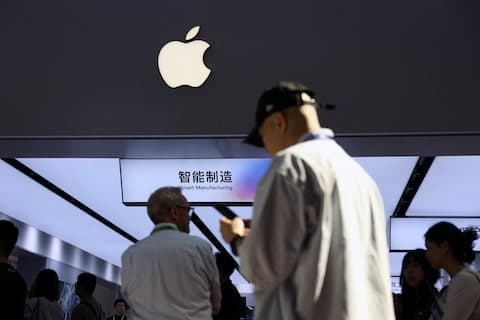
Apple had been reviewing memory chips from two Chinese manufacturers — CXMT (Changxin Memory Technologies) and YMTC (Yangtze Memory Technologies) — as a cost response to rising memory prices.

The initial plan was to use Chinese memory in products sold within China first, limiting the immediate exposure to the US market. Apple has not confirmed the sourcing evaluation.

YMTC was added to the US Entity List in 2022, which restricts US companies from supplying it with American technology. Using YMTC chips in China-sold Apple devices occupies a legal gray zone — not a clear violation, but politically toxic in the current environment.

CXMT is not on the Entity List, making Apple's potential use of its chips legally permissible. The Lutnick call changes the calculation from legal to political.

The significance here is not the outcome — Apple has not announced any decision — it is the method. The Commerce Secretary personally calling a company to tell it which suppliers are politically acceptable is a direct form of industrial policy that goes beyond tariffs or sanctions. It is the government using informal authority to shape private supply chain decisions without a formal legal mechanism. For tech companies evaluating Chinese components, the signal is clear: the administration will intervene at the executive level, not just through legislation.

Micron's Role

Micron, the dominant US memory manufacturer, lobbied the White House directly. Its message: Apple using Chinese memory contradicts the administration's reshoring agenda.

Micron's position is self-interested but structurally aligned with the administration's stated goals. It is the primary US alternative to Korean (Samsung, SK Hynix) and Chinese (CXMT, YMTC) memory suppliers. An Apple contract — or the blocking of Chinese competitors from one — is material to Micron's revenue.

The lobbying loop here: Micron tells the White House → White House tasks Lutnick → Lutnick calls Apple. The private sector activated the government's industrial policy lever.

The Broader Pattern

This follows the drone tariff proclamation signed two days earlier. In both cases, the target is Chinese technology displacing US suppliers — whether DJI in drones or CXMT/YMTC in memory. The administration is building a consistent playbook:

  • Tariffs where legal authority is clear
  • Informal pressure where tariffs are not yet in place
  • Entity List additions as the escalation step when informal pressure fails

Apple sits at the intersection of every tension in this playbook: it manufactures in China, sells in China, and now faces pressure to not source from China while competing with Chinese brands in the Chinese market.

Apple's margin structure depends heavily on component cost optimization. Locking out CXMT and YMTC — the lowest-cost memory options available — forces Apple back toward Samsung and SK Hynix, where prices are higher. For China-market devices specifically, where Apple already competes against Huawei on price, a forced cost disadvantage is a market share problem, not just a supply chain inconvenience. Micron benefits from the blocking but cannot immediately fill Apple's volume at competitive prices. The short-term winner is Samsung and SK Hynix. The medium-term question is whether CXMT achieves the scale and yield rates to become indispensable — at which point informal pressure becomes harder to sustain.

Lutnick's Message to Apple

'Not desirable' to use Chinese memory — confirmed delivered

Apple's Plan

Evaluating CXMT + YMTC for China-sold devices first

YMTC Status

US Entity List since 2022

CXMT Status

Not on Entity List — use legally permissible

Micron Position

Lobbied White House; called Apple plan a contradiction of reshoring policy

Mechanism

Informal pressure — no executive order, no tariff, no sanction

Found this useful? Share it.

ShareThreads

Related Posts