 Trump Signal Index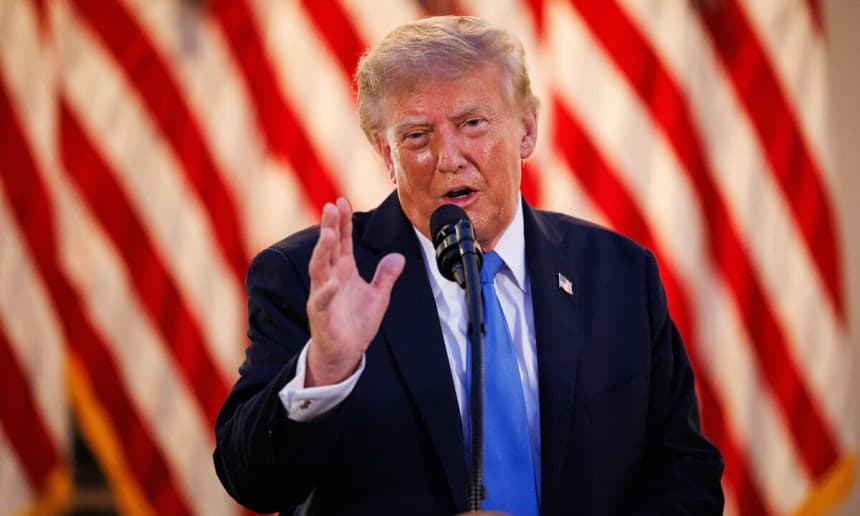
Trump told reporters at the White House on September 2: “You have Japan and Korea. All these people are going to Alaska to load up fuel, to load up oil, to build pipelines, and everything else.”
The setting matters. He was explaining why he plans to travel to Alaska to campaign for Senator Dan Sullivan, who faces Mary Peltola in a ranked-choice runoff that is expected to be close. “Nobody has helped Alaska more than Donald Trump,” he said. “We invested billions of dollars and created trillions in value.”
Then he named two foreign governments as evidence.
What He Is Actually Referring To
The claim traces back to January 20, when Trump announced trade agreements with Seoul and Tokyo alongside “an Alaska pipeline project to export natural gas to Asia.”
The terms of those deals: reciprocal tariffs cut from 25% to 15%, in exchange for investment commitments of $350 billion from Korea and $550 billion from Japan. The administration has since repeatedly floated Alaska LNG as a destination for that capital.
The project itself is specific and enormous. Gas extracted on Alaska’s North Slope would move roughly 800 miles (1,300km) through a newly built pipeline to Nikiski, an ice-free port near Anchorage, where it would be liquefied and shipped to Asian buyers.
Korea’s government has not agreed to fund it. Its stated position is that it can urge companies to invest only if profitability is assured — which is not a diplomatic hedge but a description of who actually writes the checks. The investment pledges were made by governments; the capital belongs to companies. That gap is the whole story. Trump is describing money as already deployed to a specific project, in a specific state, as an argument for a specific Senate candidate. The money is a headline number attached to a tariff rate, and the project it is supposedly funding has been proposed and abandoned repeatedly since the 1970s on the same question Seoul is asking now: does the math work?
Why Alaska LNG Keeps Failing
The economics have never closed. The gas is stranded far from any market, the pipeline crosses permafrost and seismic zones, and the construction estimate has run around $44 billion — before the liquefaction terminal. Every iteration since the 1970s has died at the point where someone had to commit capital against long-term contracts that did not exist.
Nothing in the January trade deals changed the geology or the construction cost. What changed is that two allied governments now have a political incentive to appear supportive, because the tariff relief they received is implicitly linked to the investment they promised.
That is a durable source of friction rather than a solved problem. Seoul faces a choice between pressuring its own companies into a project they have not underwritten, or letting the gap between the pledge and the deployment become visible — at a moment when the alliance is already absorbing costs from Trump’s North Korea outreach.
The Domestic Use
There is a reason this surfaced now rather than in a trade briefing. Sullivan’s race is tight, ranked-choice voting makes it unpredictable, and Alaska LNG is the one federal project that lets a candidate promise construction jobs at scale.
Foreign investment commitments are useful campaign material precisely because they are unfalsifiable on a campaign timeline. No voter can check whether Korean capital is moving toward Nikiski before November, and by the time the answer is clear the election is over.
Treat the $350B and $550B as tariff-negotiation numbers, not a capex pipeline. The tell for whether Alaska LNG is real will not be another presidential statement — it will be a final investment decision, a signed long-term offtake contract, or a named Korean or Japanese corporate sponsor putting equity in. None of those exist. For markets, the near-term effect is limited: US LNG developers with actual FIDs and Gulf Coast infrastructure remain the investable expression of Asian LNG demand, not a North Slope project that has failed for fifty years. The risk that is real sits with the allies. If Washington begins treating the investment pledges as enforceable and the projects do not materialize, tariff relief becomes reversible leverage — and that is a live threat to Korean and Japanese exporters heading into a year when both governments have already paid politically for these deals.
Trump, Sep 2
‘Japan and Korea… are going to Alaska to load up fuel, to build pipelines’
Context
Campaigning for Sen. Dan Sullivan in a close ranked-choice runoff
Korea’s Pledge
$350B investment, tied to tariffs cut from 25% to 15% in January
Japan’s Pledge
$550B under the same framework
The Project
~800-mile North Slope pipeline to Nikiski, then liquefaction for Asian export
Seoul’s Position
Will urge company investment only if profitability is assured