 Trump Signal Index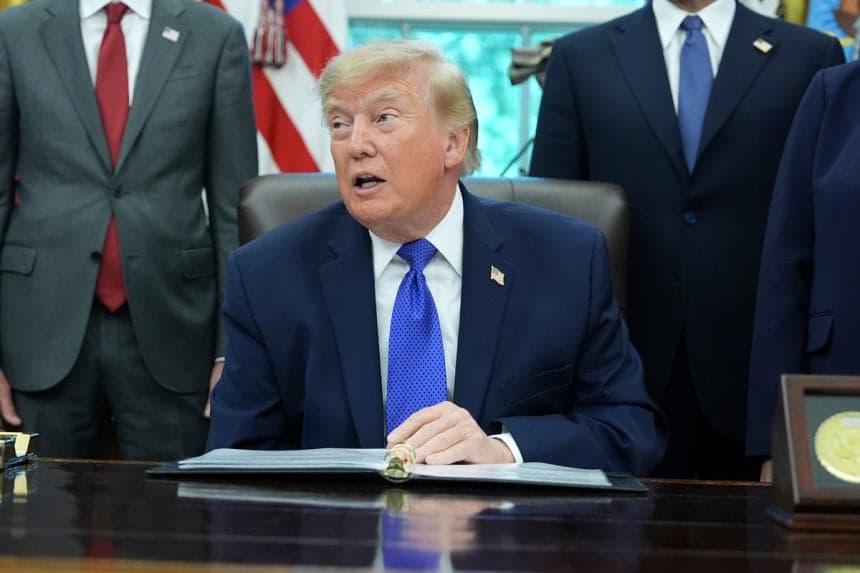
On September 28 at the White House, Trump announced what he called the largest steel mill in American history.
“I am very pleased to announce that Mesabi Metallics will build the largest steel mill in the history of our country in the great state of Iowa,” he said. “This steel will be mined, smelted, and made right here in America.”
The Project
- Investment: $15 billion
- Company: Mesabi Metallics, a Minnesota-based iron ore miner and processor owned by India’s Essar Group, which recently opened a mine in Minnesota
- Plan: Minnesota ore, turned into steel in Iowa
- Capacity: 7.5 million tons a year in the first phase, rising to 10 million tons
- White House projections: 1,750 permanent jobs, up to 6,000 construction jobs, and $95 billion added to the US economy over ten years
The White House added context on the industry. In 2025, it said, the US passed Japan in crude steel output for the first time since 1999 to become the world’s third-largest producer. Raw steel output is up 9% since Trump took office, and about 6,000 steelworker jobs have been added after nearly 10,000 were lost under the previous administration.
The Tariff Argument
Trump tied the mill directly to his trade policy. “Right after I took office, I put a strong 50% tariff on all foreign steel, and now our steel industry is coming back to life,” he said. “Everyone is building here because they don’t want to pay tariffs.”
Commerce Secretary Howard Lutnick went further: “This is what Section 232 tariffs, steel tariffs, look like when they work. Without those tariffs, this mine and this mill would never have been built.”
The same tariffs now reach Canada. Trump has announced 50% tariffs on Canadian steel, autos, and parts from January 2027.
The Midterm Argument
Then Trump connected the tariffs to the ballot. Tariffs, he said, are bringing in hundreds of billions of dollars — “and that’s one of the reasons we can give every adult $5,000 if Republicans control the House and the Senate.”
That is the “Trump Dividend” he first promised this month, a payment conditional on the election result with no funding plan published.
The location is not incidental. Trump won Iowa easily in 2024, but this November a Republican-held Senate seat and three House districts there are expected to be close.
The announcement does three jobs at once. It is industrial policy — a large, tariff-protected steel investment that fits the administration’s case that Section 232 is working. It is a campaign event — held five weeks before the vote, placed in a state with a Senate seat and three House races in play. And it is a fiscal promise — tariff revenue presented as the source of a $5,000 payment to every adult, conditional on Republicans winning both chambers. The first job is measured in tons and years. The second and third are measured on November 3. Markets should separate them: the mill is a long-dated signal that the 50% steel tariff is a permanent feature of US policy, not a bargaining chip. The dividend is a pledge the tariff revenue cannot obviously fund on its own.
The Case for Skepticism
Announcements are not mills. Mesabi Metallics is the successor to Essar Steel Minnesota, whose integrated project on the Mesabi Iron Range stalled for years, left contractors unpaid, and went through bankruptcy before being reorganized under its current name. A $15 billion, 10-million-ton plant would take years to permit and build, and its economics depend on a tariff that a future administration or court could change.
The job figures are White House projections, not commitments with public milestones. And the claim that tariffs will pay for a $5,000 dividend runs into arithmetic: a payment to roughly 260 million adults would cost well over a trillion dollars, far more than annual tariff revenue.
There is also a cost side. A 50% tariff protects steelmakers by raising the price of steel for everyone who uses it — automakers, builders, appliance makers — which is part of the price pressure voters are already unhappy about.
For markets, the mill matters less than what it signals about the tariff. A $15 billion bet made on the premise of a 50% steel tariff tells investors the administration intends that tariff to last, which supports domestic steel pricing and US-based producers and keeps input costs high for autos, construction, and machinery. It also adds a new large competitor to incumbent integrated steelmakers if it is actually built — a later-decade risk for their pricing power. The dividend pledge is the fiscal wild card: if it becomes a real legislative push after the election, it would raise deficit and bond-supply concerns. Watch for permits, financing, and a construction start date. Until then, treat the mill as a campaign announcement with an industrial price tag.
The Mill
$15B Mesabi Metallics plant in Iowa; 7.5M → 10M tons a year
White House Jobs Claim
1,750 permanent; up to 6,000 construction
Economic Claim
$95B added over ten years
The Tariff
50% on all foreign steel — ‘Section 232 … when they work’
The Promise
Tariff revenue helps fund $5,000 per adult if GOP wins both chambers
The Map
Iowa: one Senate seat, three House districts in play