 Trump Signal Index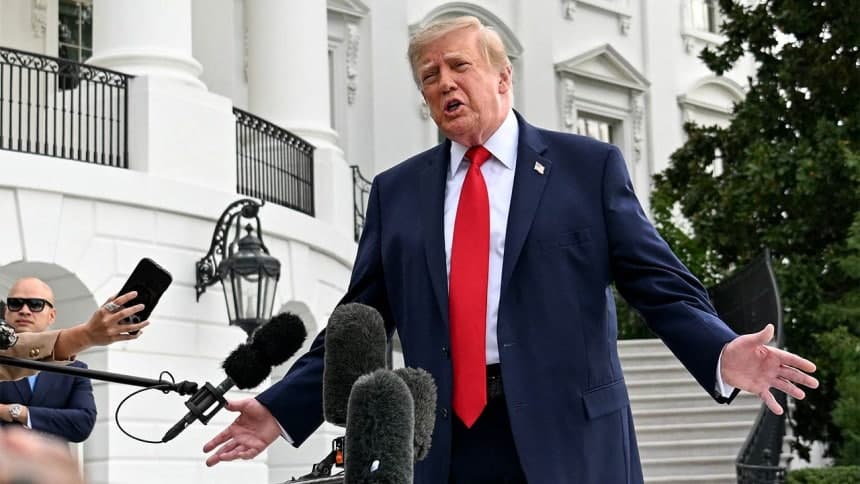
The summit readouts are out, and the word both sides left out is Taiwan.
The White House fact sheet did not mention it. China’s statement did not mention it. On September 26, boarding Marine One, Trump was asked about it.
“We didn’t discuss Taiwan excessively with President Xi,” he said. “It’s fine right now, you know. It’s just going well. He understands my position very well.”
What Each Side Said on Taiwan
- Xi, in the talks (September 24): He said he hoped the US would “uphold the correct position of opposing ‘Taiwan independence’” and handle the Taiwan question prudently.
- The White House fact sheet: No mention of Taiwan.
- China’s readout: No mention of Taiwan.
- Trump (September 26): Not discussed “excessively.” Xi “understands my position.”
- Wang Yi (September 26, after Xi returned to Beijing): A separate briefing said China made clear it will firmly defend national reunification and territorial integrity, and urged the US to hold to its correct position of opposing Taiwan independence.
The vocabulary matters. The standing US formula is that Washington does “not support” Taiwan independence. Beijing has pushed for years to get a US president to say it “opposes” it. Ahead of the visit, that one word was the stake to watch.
Silence cut differently for each side. The US left Taiwan out of its fact sheet, so it did not repeat “oppose” — the formula held on paper. But Trump did not restate US policy either, and his description of the talks — not much discussed, going fine, Xi understands — is how you describe an issue both leaders have agreed not to fight over this year. China used the gap well: it kept Taiwan out of the joint record, then had Wang Yi assert Beijing’s version the moment Xi landed, framed as a “correct position” the US already holds. As this site noted after the state dinner, silence on Taiwan after that toast would say more than any sentence in it. The result is no new US commitment and no restatement of the old one — and a Chinese account that describes the American position for it. With US arms sales to Taiwan paused since May, that is a quiet shift toward Beijing’s framing.
Iran: “I’m Rejecting Their Offer”
The same remarks settled the question this site raised a day earlier. Asked about Iran’s seven-day plan to reopen the Strait of Hormuz, Trump said: “I’m rejecting their offer.”
“They want a deal to open the strait immediately because the war is going so badly for them,” he said. “I love deals, but what they offered is not acceptable.”
He went further on the blockade. Iran, he said, got clever and thought it would block the strait and make trouble for the whole world, and it backfired. “Since I got involved, we built the greatest blockade in military history. They tried to close the strait, but we closed them instead, and now they’re completely out of money.”
Iran’s plan, set out by Foreign Minister Abbas Araghchi at the UN on September 24, asked for four steps first: seven days without hostilities across the region, unfrozen assets, lifted oil sanctions, and an end to the US naval blockade. Iran would then reopen Hormuz on day seven and return to peace talks.
Trump’s answer rejects the sequencing, not the idea of a deal. His claim that Iran is “out of money” is the logic: if the blockade is working, lifting it first gives away the leverage.
Cuba and Ukraine
Two shorter lines from the same exchange:
- Cuba: “We’re going to make a deal with Cuba. I don’t think military force will be necessary.” Cuba is in “a very severe crisis,” he said, and “we want to help.”
- Russia–Ukraine: They will reach a deal “someday, hopefully not too far in the future, maybe before a harsh winter.”
The Case Against Over-Reading
Leaving Taiwan out of a fact sheet is common when leaders want a summit to look successful. It does not change US law or the Taiwan Relations Act. Trump’s “he understands my position” can also be read as Trump holding the line privately. On Iran, rejecting an opening offer is normal in a negotiation. US officials said this week that mediated talks remain “positive and constructive,” and a rejection of terms is not a rejection of talks.
Two signals for markets. On Taiwan, the summit produced no formal shift, which removes the worst-case headline risk for Taiwan-exposed semiconductors in the near term. But the direction of drift favors Beijing’s framing, and the arms-sale pause continues, so the longer-dated tail for Taiwan has not narrowed. On Iran, the rejection makes a Hormuz reopening before the November midterms less likely and keeps the crude risk premium in place. Trump’s claim that the blockade has Iran “out of money” means he believes time is on his side. That points to a longer standoff, not an early deal. Watch for Iran’s response through the mediators, and for any US counter-sequence. A counter-offer would be the first sign the talks are moving.
US Fact Sheet
No mention of Taiwan
China’s Readout
No mention of Taiwan
Trump
Not discussed ‘excessively’; Xi ‘understands my position very well’
Wang Yi
US should keep its ‘correct position of opposing Taiwan independence’
Iran’s Plan
‘I’m rejecting their offer … not acceptable’
Also
Cuba deal ‘without military force’; Ukraine deal maybe ‘before a harsh winter’