 Trump Signal Index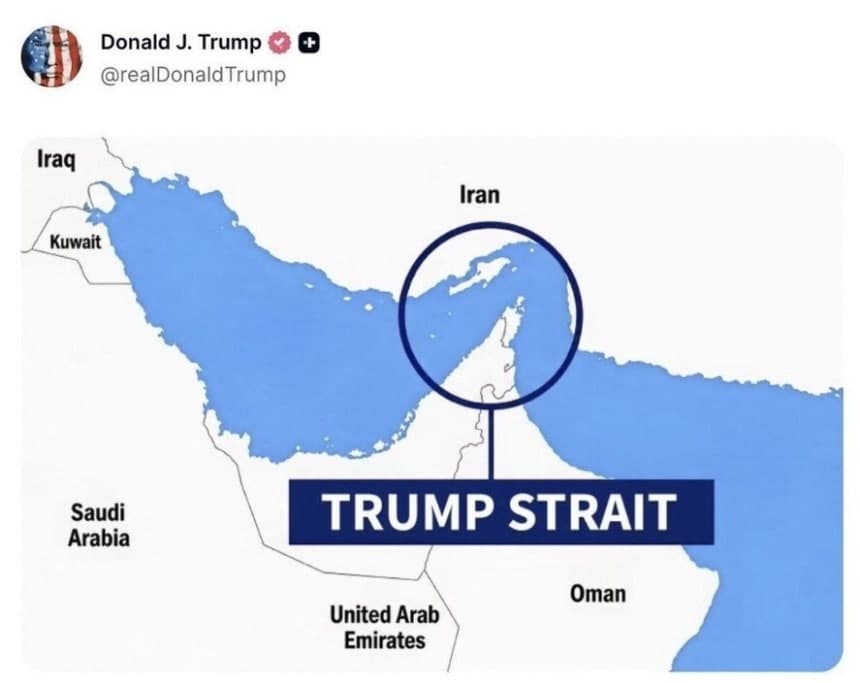
On September 26, Trump posted a map of the Persian Gulf to Truth Social. A circle sits over the Strait of Hormuz. The label under it reads TRUMP STRAIT.
It was his first public reaction to the most concrete offer Iran has made since the war began.
The Seven-Day Plan
Iranian Foreign Minister Abbas Araghchi, in New York for the UN General Assembly, passed a proposal to Washington through mediators on September 24. It asks for four things first:
- A halt to hostilities across the Middle East for seven days
- Release of Iran’s frozen assets
- Lifting of sanctions on Iranian oil
- An end to the US naval blockade of Iran
If those come first, Iran says it will reopen the Strait of Hormuz to shipping within seven days and enter peace and nuclear talks.
The US side did not dismiss it. A US official told Reuters that Washington is holding “positive and constructive” discussions with Iran through mediators, including on the nuclear issue.
The Map
Then came the map. The name is not new. Trump posted a map in August calling Hormuz “new American territory,” and on September 2 he asked on Truth Social whether the strait should be renamed “Trump Strait,” since the US now had it “under American control.” The same day, asked at the White House whether he meant it, he said no: “It was just thrown out there.”
Posting it again now, two days into a live negotiation over who controls the strait, reads as an answer. The map does not recognize any Iranian claim over Hormuz. The offer asks the US to lift its blockade and hand shipping back to an Iranian reopening. The map says the strait is Trump’s.
What Trump Says in Private
The Wall Street Journal reported on September 25, citing administration sources, that Trump has been privately skeptical Iran will meet his demands. He has told aides that resuming the bombing campaign after the November midterms is a strong possibility.
That fits the timeline he has set in public. He has said the war will end “right after the election,” and on September 20 he said “the question is when we blow up the whole country.” A day later at the UN he called Iran “not thugs anymore.”
There are two US messages on Iran this week, and they come from different channels. The negotiating channel — officials, mediators, the Reuters quote — says the talks are constructive and the nuclear file is open. The presidential channel — a map, a nickname, a private remark to aides about bombing after November — says the terms are not acceptable and the timeline runs past the midterms. Iran’s offer is built on sequencing: the US moves first on the blockade and sanctions, Iran reopens second. A president who renames the strait after himself is signaling he will not be the side that moves first. The most likely reading is that the talks continue as a holding pattern while the real decision waits for the election.
The Case for Reading Less Into It
Trump has posted provocative maps before and walked them back the same day. The September 2 “Trump Strait” post ended with him telling reporters it was just an idea thrown out. The Reuters quote came from officials who are doing the actual negotiating, and nothing in the map closes that channel. The map may be domestic politics six weeks before a vote, not a negotiating position.
The WSJ report is also about private remarks, relayed by sources. It describes Trump’s mood toward the offer, not a decision.
For oil, the week’s signal is that the de-escalation path exists but is unlikely to close before November. Iran’s plan is the first offer with a specific timeline for reopening Hormuz, which puts a floor under hopes for a deal. Trump’s map and the WSJ account push the likely date of any agreement past the midterms and raise the odds of a post-election strike campaign. That keeps a risk premium in crude and in shipping and insurance costs through the election, with two tails: a surprise acceptance of the sequencing, which would drop oil sharply, or a resumed bombing campaign in November, which would spike it. Watch whether the US answers the plan through the mediators with a counter-sequence. A US counter-offer would matter more than any map.
Iran’s Offer
Seven-day plan: ceasefire, assets, oil sanctions, blockade lifted first
Iran’s Promise
Reopen Hormuz within seven days, then peace and nuclear talks
US Officials
Talks via mediators ‘positive and constructive’ (Reuters)
Trump’s Answer
Truth Social map labeling Hormuz ‘TRUMP STRAIT’
In Private
Skeptical of a deal; bombing after the midterms likely (WSJ)
Next
Any US counter-offer through the mediators