 Trump Signal Index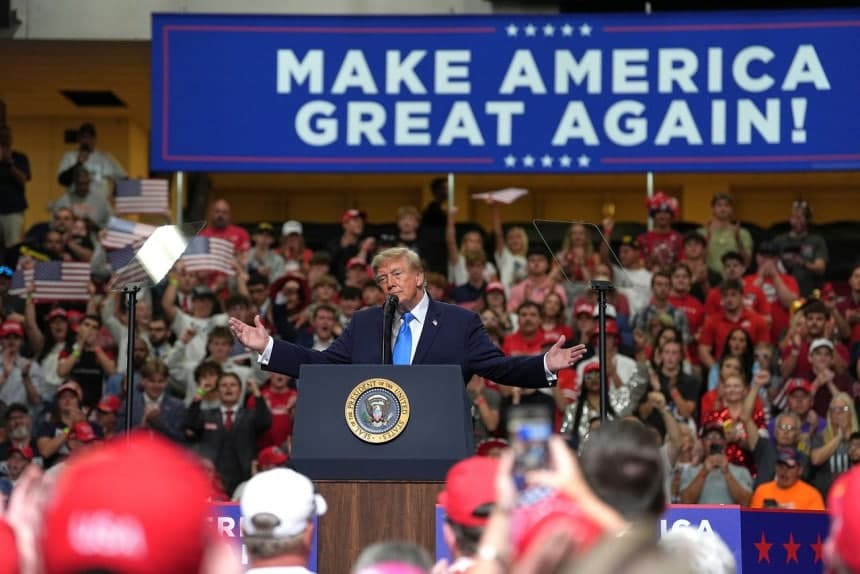
Trump made the midterms about himself again on October 4.
“Polls have always underestimated the true size of MAGA,” he posted on Truth Social. “I am the candidate on this ballot.”
The message is the same one he gave the Texas Republican convention last month, where he asked voters to treat his name as if it were on the ballot. He has been working battleground states, most recently Oklahoma, to turn out the base.
The Numbers Going the Other Way
- CBS News/YouGov battleground poll (October 4): Democrats 54%, Republicans 44% on the generic House ballot — a 10-point gap.
- Polling averages: Democrats ahead by about 7 points.
- Trump’s approval: in the 30s.
Trump’s answer to that is the first half of his post: the polls are wrong about his voters. They undercounted him in 2016 and 2020. Whether they are undercounting a midterm electorate, when he is not literally on the ballot, is the bet he is making.
Democrats Are Writing the Post-Trump Agenda
Democrats are acting as if they expect to win. The Washington Post reported on October 4 that they are preparing a broad legislative package to roll back the expanded powers of the presidency if they take both chambers.
The bills already on the table:
- Emergency powers: Reps. Suzan DelBene and Don Beyer have introduced a bill to limit national emergency declarations. Trump has used them 12 times as the legal basis for tariffs, deportations, and National Guard deployments.
- Foreign money and renovations: Rep. Jamie Raskin’s bill would bar the president from accepting money from foreign governments without Congress’s consent and require public review of White House renovation work — a direct answer to the $927 million renovation Congress largely did not approve.
- Speech and prosecution: Sen. Chris Murphy is pushing a bill to limit a president’s ability to prosecute or punish people or groups for their speech. That lands after Trump warned AI-safety critics about his “criminal and regulatory power” and barred news outlets from White House coverage.
- Civil service: Stronger protections to prevent a repeat of the mass federal layoffs early in the administration.
The Post compared the effort to the reform wave after Richard Nixon resigned in 1974. It also added the caveat: Democrats passed those laws with 61 Senate seats and 291 House seats. Nobody expects margins like that in November.
The gap between drafting and passing is the whole story for the next two years. Every bill on this list would face Trump’s veto, and overriding it takes two-thirds of both chambers — numbers Democrats will not have. So a Democratic win does not repeal the expanded presidency. What it changes is leverage: subpoenas, hearings, and control of spending bills. The bill that matters most to markets is the one on emergency powers, because emergency declarations are the legal footing for much of the tariff program. A Democratic House cannot cancel those tariffs on its own, but it can make them the center of oversight and appropriations fights, and a future court or Congress more willing to narrow them. The other effect is on Trump’s own promises: the $5,000 “Trump Dividend” is conditional on Republicans holding both chambers. Polls at D+7 to D+10 are a market forecast for that pledge too.
The Case for Trump’s Read
Midterm polls a month out are not results. Generic-ballot leads often narrow, and a national lead does not translate evenly into Senate seats. Trump’s claim about MAGA turnout has been right before, in presidential years. Democrats drafting bills before winning can also backfire, giving Republicans a message about overreach. And a majority built on a 7-point national lead can still be narrow in seats.
Markets have historically handled divided government well: gridlock limits big fiscal moves in either direction. The specific risks here are more targeted. A Democratic House would raise the odds of spending standoffs and oversight fights over tariffs and emergency powers, adding noise to trade policy into 2027. It would end the $5,000 dividend pledge, which removes a fiscal wild card for bond markets. And it would increase legal and political pressure on the tools behind the tariff program without removing them. Watch the polling trend in the last four weeks rather than any single survey, and the races in states like Iowa and Texas where Trump has concentrated money and announcements. A narrowing to low single digits would make Trump’s “polls are wrong” bet live again.
Trump
‘I am the candidate on this ballot’ — polls ‘underestimated’ MAGA
CBS/YouGov Battleground
Democrats 54%, Republicans 44%
Polling Average
Democrats +7; Trump approval in the 30s
Emergency Powers
Invoked 12 times — tariffs, deportations, National Guard
Democrats’ Bills
Emergency powers, foreign money, speech prosecutions, civil service
1974 Comparison
Post-Watergate reforms passed with 61 Senate, 291 House seats