 Trump Signal Index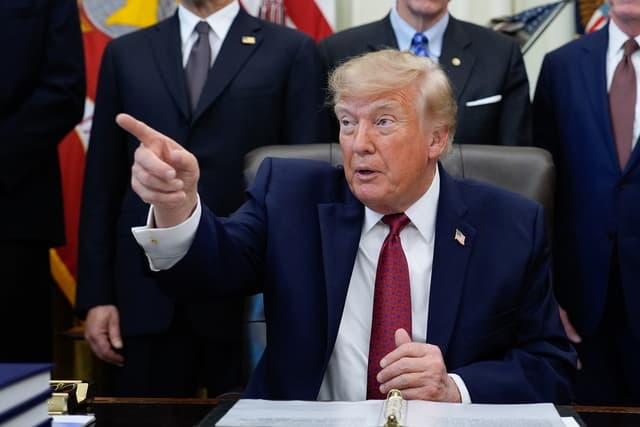
Trump took the Iran war to a campaign stage on October 2.
“The war will end soon,” he told a midterm rally in Mobile, Alabama. “One way or another, it will end very quickly — probably right after the midterms.”
When it does, he said, oil will fall fast. “The moment the war ends, oil prices will come down sharply.” Over time, he added, they could drop below where they were in his first term.
What Was Not Announced
No ceasefire. No terms. No date. The end of the war “right after the midterms” is Trump’s forecast, not an agreement with anyone.
It is also not new. He gave the same timeline in September, saying the war would end “right after the election.” What has changed since then is the evidence on how.
“One Way or Another”
Put the rally line next to the week’s reporting.
- September 25: The Wall Street Journal reported he has told aides that resuming the bombing campaign after the midterms is likely.
- September 26: Trump rejected Iran’s seven-day plan to reopen Hormuz: “not acceptable.”
- September 27: He told Axios he expects more talks this week and is “always thinking” about resuming strikes.
- October 2: The war ends “one way or another,” right after the vote.
“One way or another” covers both paths: a negotiated end, or a decisive escalation. Both fit the same calendar.
The rally promise is built so that it cannot be tested before November 3. Voters are told the war ends right after the election and that fuel prices fall when it does. Both claims resolve only after the ballots are counted. And “one way or another” leaves open the outcome the Journal reported he described privately — a bombing campaign after the vote. A war that “ends” with a large strike would not lower oil on day one; it would raise it until the strait actually reopens. The only part of the speech that pays out before the election is the expectation itself.
The 310% Claim
Trump also said Iran’s economy is in deep trouble, with inflation of about 310%. No Iranian government or international statistic located for this report supports that figure. Iran’s inflation is high and the blockade has hurt its economy, but 310% should be read as Trump’s number, not a measured one.
He repeated that stopping an Iranian nuclear weapon is the core US objective, and said US strikes have done heavy damage that will take Iran a long time to rebuild.
The G7 Moves on Stocks
The rally came as G7 governments moved to release 100 million barrels of crude and diesel from strategic stocks to calm prices. That follows the US demand this week that Europe release 120 million barrels of diesel or face limits on US diesel exports, and Macron’s call for a G7 meeting on energy prices.
The Other Side
Trump’s forecast could prove right. If talks through the mediators produce a sequence both sides accept, a post-election deal is plausible, and the oil market would likely react the way he says: the war premium would come out of crude quickly. Tying the end of a war to a political calendar is not unusual for any president, and he has been consistent about the timeline for weeks.
For oil, the rally adds expectation, not supply. A credible end to the war would compress the risk premium fast, which is why futures react to these remarks. But this one carries both outcomes. A negotiated reopening of Hormuz after November 3 would push crude down sharply; a resumed bombing campaign would push it up first. The G7’s 100-million-barrel release eases near-term tightness and caps prices into the election, which is its political purpose as much as a market one. Treat the post-midterm window as a binary event, not a scheduled decline. The tell will be whether the mediated talks produce a counter-sequence on the blockade before the vote.
The Promise
War ends ‘one way or another … probably right after the midterms’
On Oil
‘The moment the war ends, oil prices will come down sharply’
Iran Inflation Claim
~310% — not supported by official statistics
Announced
No ceasefire, terms, or date
In Private (WSJ)
Bombing after the midterms seen as likely
G7
100M barrels of crude and diesel stocks released