 Trump Signal Index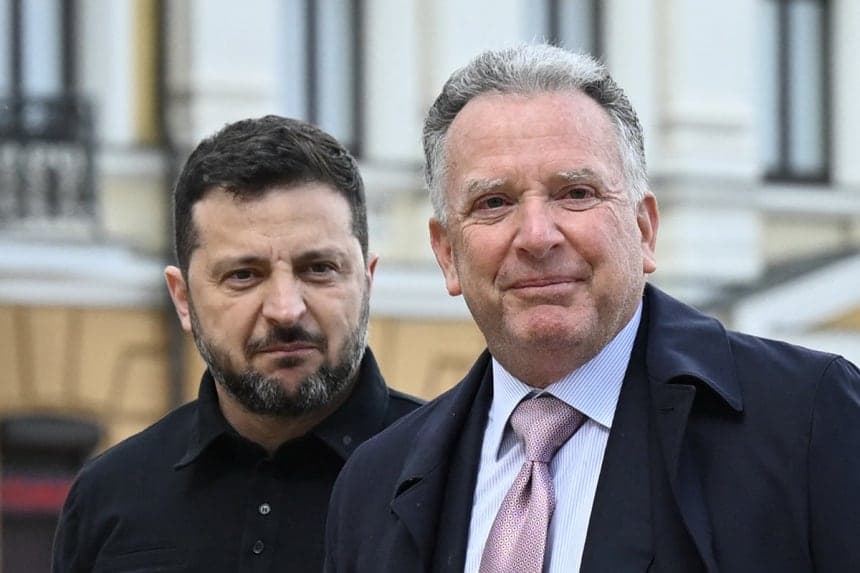
Steve Witkoff, Trump’s special envoy, and Jared Kushner, Trump’s son-in-law, met Volodymyr Zelensky at the St. Sophia Cathedral complex in Kyiv on September 6 — the first time Trump’s envoys have set foot in Ukraine since the US began mediating this war.
They arrived from the other side. The previous day, the two men spent more than three hours with Putin in the Kremlin — a session Putin’s aide Yuri Ushakov called “timely and useful” — then rode a train more than eleven hours from Rzeszów, Poland into Kyiv.
The itinerary is the story in miniature: eight visits to Moscow, and now one to Kyiv. The imbalance had drawn criticism for months while the US mediated a war it only discussed with one side in person.
What Each Side Brought
The Kremlin meeting produced no visible movement. Russia restated its position that it can take the eastern Donbas by force — the same territorial demand Ukraine has always refused. And through the entire envoy visit, Putin’s side gave no answer to the ceasefire proposal Ukraine has on the table.
Zelensky, posting before the envoys arrived, set out his terms: “Our proposals are ready. What matters is negotiating in a coordinated, practical, realistic way. We need security guarantees.”
So the structure is unchanged: Russia wants land before peace, Ukraine wants a ceasefire and guarantees before talking about anything else, and Russia won’t respond to the ceasefire at all.
The one concrete product of the diplomacy was a three-day pause — and its scope is the tell. Both sides agreed not to strike each other’s capitals during the meetings. Everywhere outside the capitals, the war accelerated: Ukraine struck the Ryazan refinery, one of Russia’s largest; Russia launched 108 drones; and Putin ordered mass retaliatory strikes on Ukrainian energy infrastructure on September 1. A truce narrow enough to protect only the negotiators’ meeting rooms, while both sides escalate long-range strikes on energy targets, is not a de-escalation pathway. The FT’s assessment matches the facts: a broad ceasefire is growing less likely, not more.
Why Now: The Third Door
US mediation of this war stopped in February, when the Iran war consumed the administration’s bandwidth. Its resumption now — with the president’s son-in-law personally on the train — fits a pattern that has been visible all month.
Trump needs a foreign-policy achievement before November, and the first two attempts have stalled. The push for a Kim Jong-un summit has met silence from Pyongyang. Iran offers no exit by Trump’s own choice. Ukraine is the third door — the one conflict where both sides at least accept American envoys in the same week.
The choice of Kushner also extends the year’s most consistent structural theme: state functions running through personal and family channels. The envoy corps for the largest war in Europe consists of a real-estate friend of the president and the president’s son-in-law. Whatever its diplomatic merits, it means Ukraine policy — like the super PAC, like the family crypto bank — lives inside Trump’s personal orbit rather than the institutions.
What It Means for Markets
The instinct will be to price peace-deal probability on headlines like “envoys meet Zelensky.” The facts argue against it.
Nothing moved on substance: the Donbas demand stands, the ceasefire went unanswered, and the escalation orders on both sides predate and survive the visit. Meanwhile the physical war is concentrating on energy assets — Ukrainian strikes on Russian refining capacity (Ryazan is among Russia’s largest) and Russian strikes on Ukraine’s power grid ahead of winter.
Treat this as an energy-infrastructure war with a diplomatic subplot, not the reverse. Ukrainian drone reach into Russian refining supports refined-product prices and European gas risk regardless of what the envoys announce, and Putin’s September 1 energy-retaliation order points at a hard winter for Ukraine’s grid — which historically translates into European support-fatigue politics by January. The peace-premium trade needs one of two confirmations before it is real: Russia responding formally to the ceasefire proposal, or any US statement pairing pressure on Moscow with the diplomacy — eight-to-one visit ratios and three-hour Kremlin meetings without either are process, not progress. The midterm clock cuts both ways: Trump wants a deal announcement by November, which gives Putin leverage to extract terms, and a deal shaped by that asymmetry would be unstable enough that markets should discount its duration even if one is signed.
The First
Witkoff and Kushner in Kyiv — first Trump envoy visit to Ukraine ever
The Ratio
8 envoy trips to Moscow before 1 to Kyiv
Kremlin Session
3+ hours with Putin; Donbas demand restated, ceasefire unanswered
The Pause
Capitals only, 3 days — everywhere else the war escalated
The Escalation
Ukraine hit the Ryazan refinery; Russia fired 108 drones; energy-infra retaliation ordered
The Context
Mediation frozen since February by the Iran war; resumed with midterms 2 months out