 Trump Signal Index
Sector
Geopolitical Risk
30 reports on how Trump moves Geopolitical Risk markets · 28 bullish · 1 bearish · 1 neutral
Signal Trend
Last 3 months · 26 reports
Bar height shows how often Geopolitical Risk appeared in reports that week; color shows whether those reports read the sector as bullish, bearish, or mixed.
2026-10-13
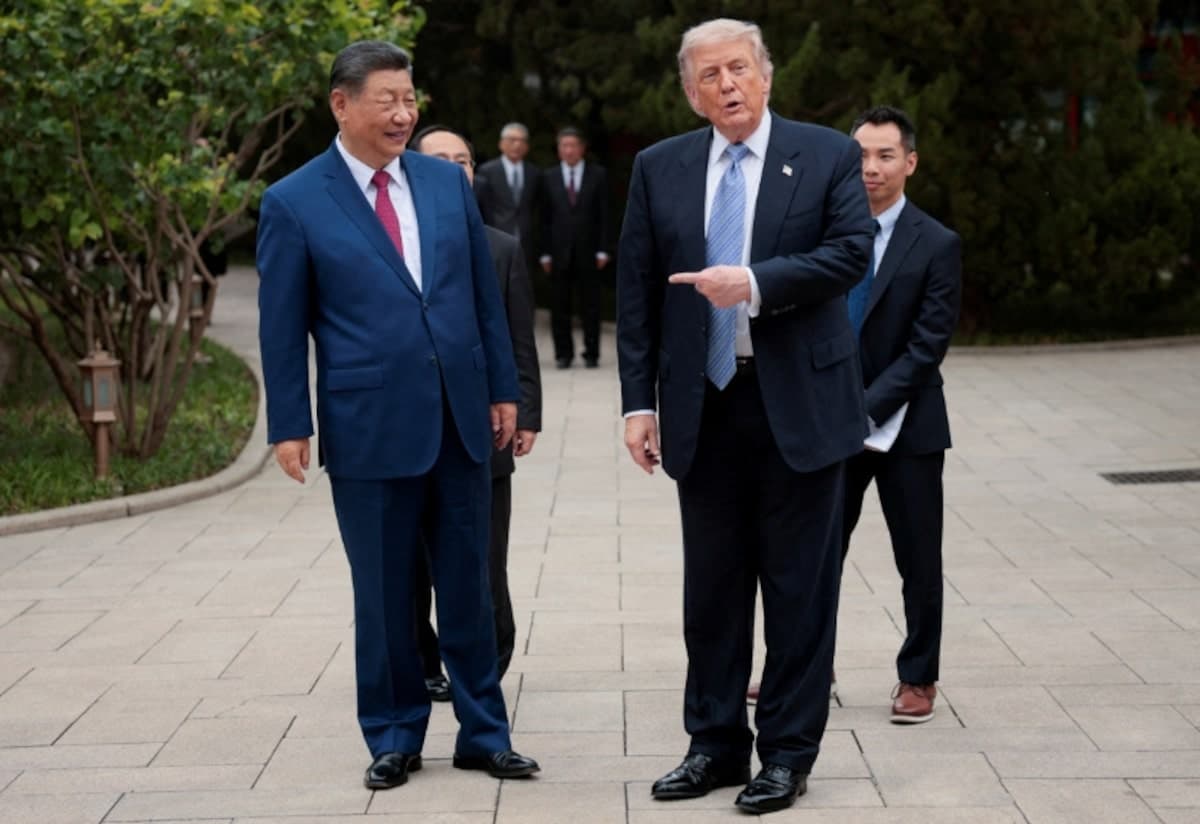
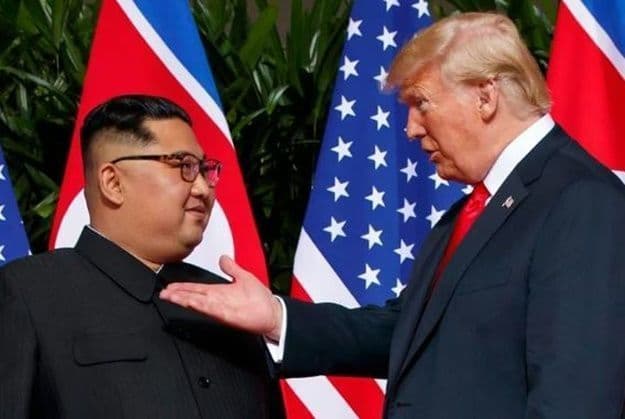
Geopolitical Risk ↓Trump Says He Might Meet Kim Jong-un on His Asia Trip. Washington Has Already Met Kim’s Main Condition — and Heard Nothing Back.
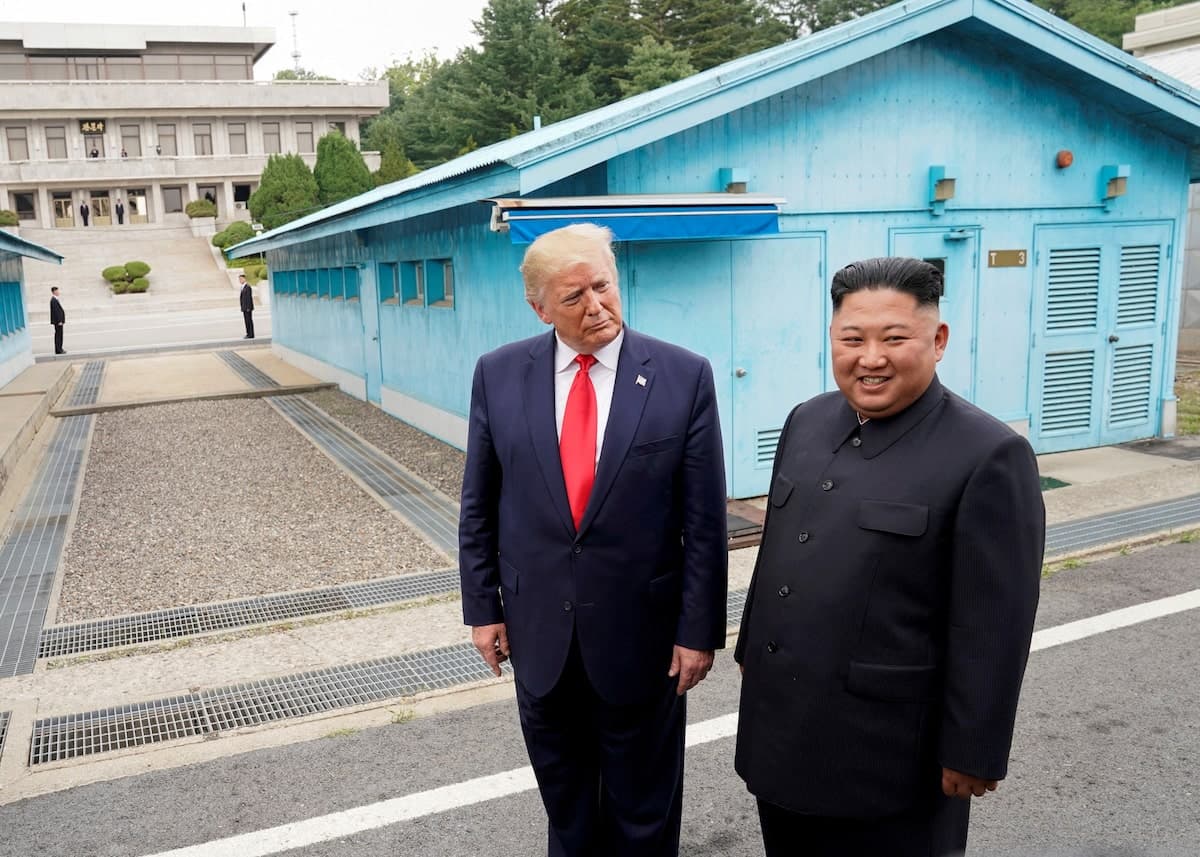
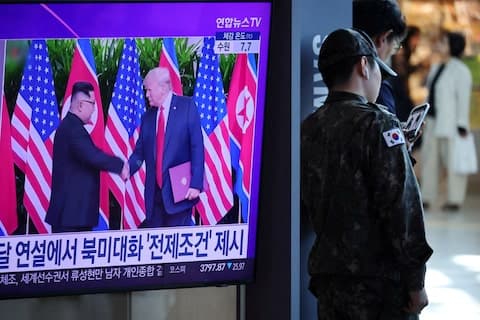
Asked at the White House on October 12 whether he plans to meet Kim Jong-un during his trip to Asia next month, Trump said he might, without giving details. The trip is for the APEC summit in Shenzhen, China, on November 18–19, two weeks after the midterms. It is the latest in a run of signals to Pyongyang: scaled-back US-Korea drills in August, a White House offer of talks ‘without any preconditions’ that left out denuclearization, and Trump calling Kim ‘my friend’ with ‘a pretty substantial nuclear capability.’ Kim’s position is that he will no longer discuss denuclearization — the condition he set in 2025 for talking to Trump at all. North Korea has not publicly taken up any of the offers. Some observers expect Trump to seek a first visit by a sitting US president to Pyongyang.
2026-10-12
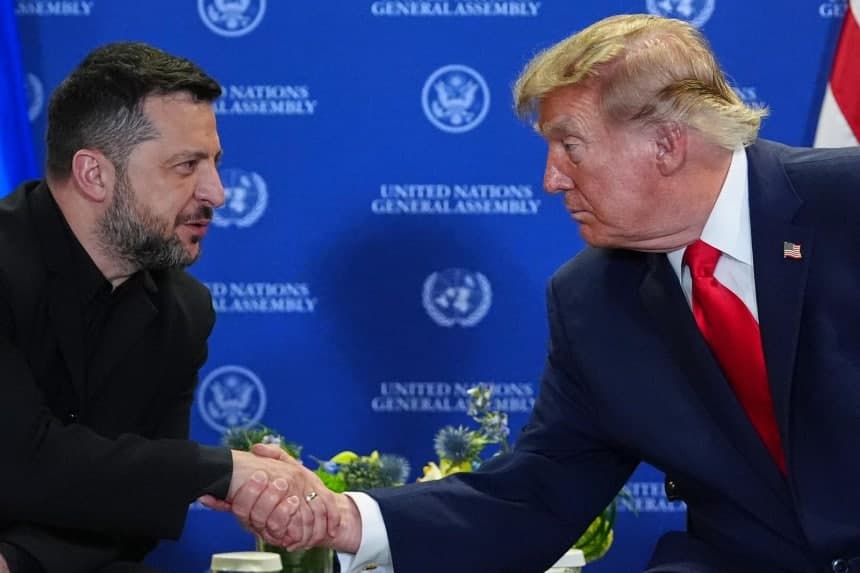
Geopolitical Risk ↑Trump’s Second ‘Energy Ceasefire’ in a Month: Moscow Says It Agreed to Nothing, Kyiv Hadn’t Heard of It, and Ukraine’s US Weapons Are on the Line
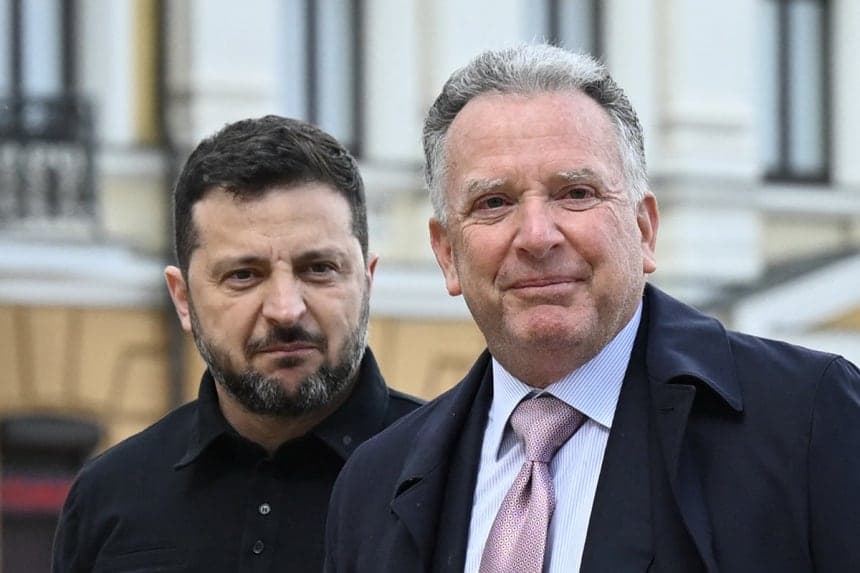
On October 11 Trump posted that an ‘ENERGY CEASEFIRE’ between Russia and Ukraine takes effect immediately, that both sides agreed, and that neither should violate it. Moscow said it has not agreed to any form of ceasefire, and Russian forces struck gas facilities and fuel stations in Kharkiv the same day. Zelensky said it was the first he had heard of it. Axios reported Trump is angry about Ukraine’s strikes on Russian refineries and feels Zelensky takes US support for granted; the Financial Times raised the possibility that the US could stop sharing intelligence with Ukraine and halt US weapons sales to Kyiv through NATO allies. Zelensky answered the push for new leadership on ABC: get Putin to agree to a full 60-day ceasefire, and Ukraine will prepare an election. The Kremlin rejected that on October 12. It is the second energy truce in a month that Trump has announced and neither side confirmed — and it would protect the Russian refineries his diesel deal depends on.
2026-10-11
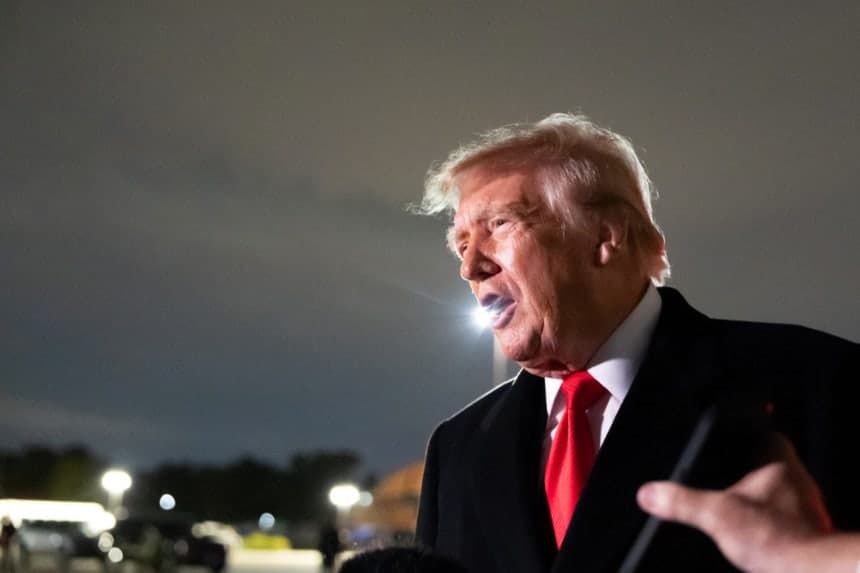
Geopolitical Risk ↑Russian Diesel for America, a New Leader for Ukraine: Trump’s Fuel-Price Push Turns on Zelensky
After his October 9 call with Putin, Trump said Russia will supply more than 300,000 tons of diesel to the US and world markets immediately, 500,000 tons in November, 1 million after that, and up to 3 million more depending on its refineries. It comes about three weeks after he signed a Russia sanctions law that provides for tariffs of up to 100% on Russian energy imports. Zelensky called it a weak decision by a strong partner and said Russia will answer it with more terror and betrayal. Trump, speaking to reporters at the White House on October 9, said Ukraine needs a new leader who can reach a deal with Russia. Behind both moves is a price: US diesel averages $6.28 a gallon, about double a year ago, with the midterms three weeks out. The largest Russian tranche depends on the refineries Ukraine has been striking.
2026-09-30
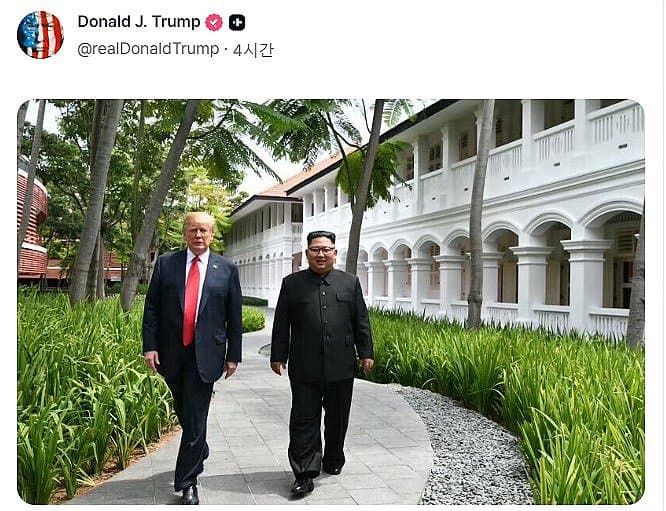
Geopolitical Risk ↑Why Can North Korea Have Nukes When Iran Can’t? Trump’s Answer: ‘Other Presidents’ — and ‘Kim Jong-un Is My Friend’
Asked on September 29 why North Korea can have nuclear weapons when Iran cannot, Trump called it ‘an interesting question’ and blamed his predecessors: ‘There were other presidents. They could have stopped him.’ Then he described Kim Jong-un as ‘my friend’ who likes almost no one but Trump, and said North Korea has ‘a pretty substantial nuclear capability — not as much as us.’ As long as he is in office, he said, Kim will be ‘fine,’ because Kim respects him. The US is fighting a war to keep Iran from getting a bomb. The same afternoon, its president treated North Korea’s arsenal as settled and the relationship as personal. For every government weighing a nuclear program, the lesson is hard to miss: the country that gets there first gets a friend.
2026-09-27
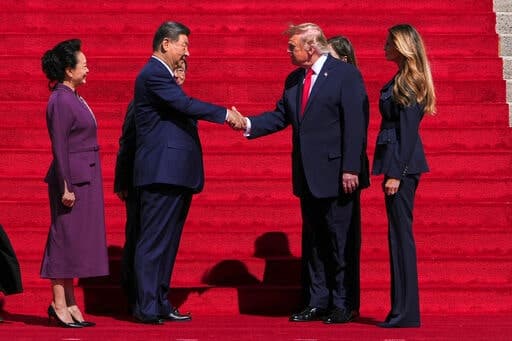
Geopolitical Risk ↑Taiwan Didn’t Make the Summit Fact Sheet. ‘World War II Allies’ Did — and Japan Noticed.
The White House fact sheet on the Trump–Xi summit left out Taiwan, but it did include this: the two leaders ‘recalled that the United States and China were allies in World War II and fought side by side to win the war.’ Trump raised the Flying Tigers in his welcome; Xi, at the state dinner, spoke of the two peoples standing shoulder to shoulder against ‘Japanese militarist invaders’ in a friendship ‘forged in blood and fire.’ The history is accurate. The choice to put it in the official record is political: it is Beijing’s preferred frame, and it casts America’s closest ally in Asia as the old enemy. Japan’s Prime Minister Takaichi spoke with Trump for about 20 minutes on September 26 and told reporters the US and Japan ‘had a war, but reconciled firmly,’ and are now allies bound by very strong trust.
2026-09-26
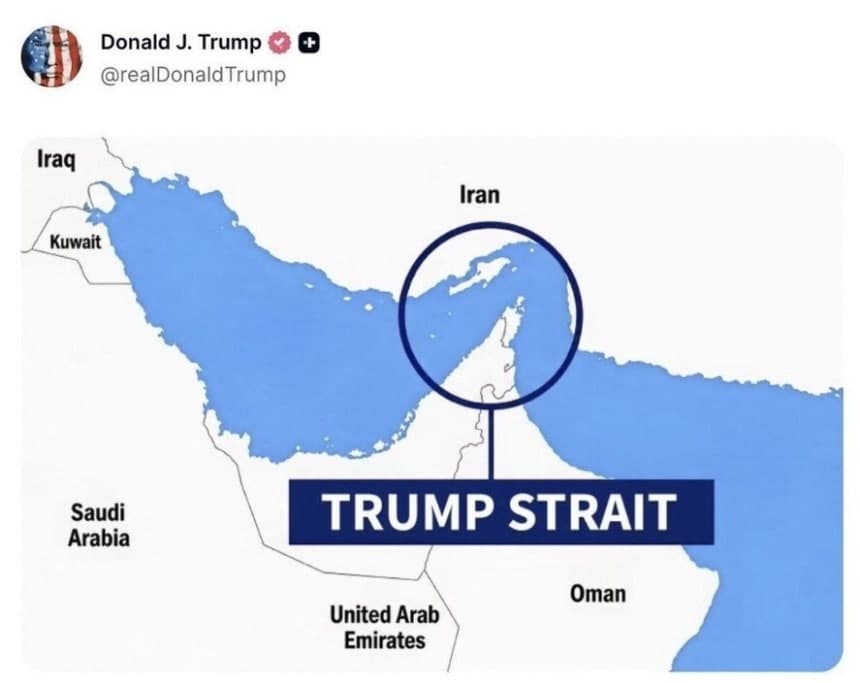
Geopolitical Risk ↑‘Trump Strait’: Iran Offered a Seven-Day Plan to Reopen Hormuz. Trump Answered With a Map.
Two days after Iran’s foreign minister sent Washington a ‘seven-day plan’ through mediators — a regional ceasefire, unfrozen assets, oil sanctions lifted, and the US naval blockade ended, in exchange for reopening the Strait of Hormuz within a week and returning to nuclear talks — Trump’s first public response was a Truth Social map labeling the strait ‘TRUMP STRAIT.’ US officials told Reuters the talks through mediators are ‘positive and constructive.’ The Wall Street Journal reported the day before that Trump is privately skeptical Iran will meet his demands and has told aides a resumed bombing campaign after the November midterms is likely. Two channels, two messages, one strait.
2026-09-21
Geopolitical Risk ↑‘The Question Is When We Blow Up the Whole Country’ — Two Days Before He Shares a Building With Iran’s President
Trump told Fox News on September 20 that with Iran, ‘the question is when we blow up the whole country,’ that he is in the deciding stage, and that ‘something very big will happen in the near future’ — listing annihilation, economic strangulation, or a deal as the live options. The IRGC answered that every US base in the Middle East, and naval assets out to the Indian Ocean, become targets if he strikes. Underneath the noise, the first genuine diplomatic signal of the war: Iran’s Security Council secretary says Tehran has sent conditions through mediators — end the war on all fronts, unfreeze assets, lift the naval blockade. The UN General Assembly opens September 22 with Trump and President Pezeshkian in the same building, and Trump has left a meeting open. Both paths of the binary are now live at once.
2026-09-18
Geopolitical Risk ↑A Permanent Base for Poland, Reparations Bills for Everyone Else: How Trump’s Alliance Map Actually Works
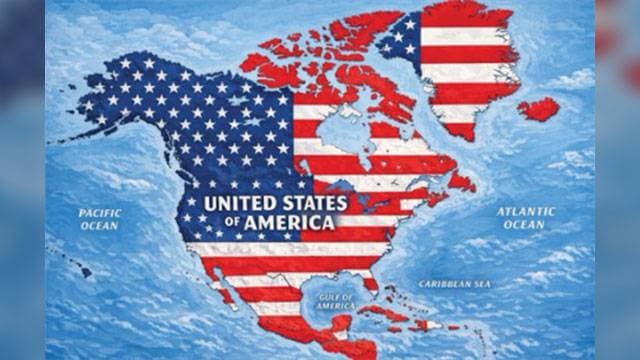
Trump announced ‘major progress’ toward a permanent US Army base in Poland on September 17, crediting ‘my friend’ President Karol Nawrocki’s ‘bold leadership’ and promising a location ‘very soon’ — while confirming neither a deal, a site, nor a date. The announcement lands in the same month Trump demanded war reparations from allies, painted Iceland into a US map, and kept cutting exercises in Korea. The pattern resolves the contradiction: Poland spends more of its GDP on defense than any NATO member, buys American weapons at scale, and elected a Trump-aligned president. The ally that pays rent gets the garrison. The ones that don’t get the bill.
2026-09-16
Geopolitical Risk ↑Pay Up When It’s Over: Trump Demands ‘Reparations’ From the Countries That Didn’t Join His Iran War
In a Truth Social post, Trump declared that ‘oil is flowing through the Strait of Hormuz’ and that ‘countries of the world that gave us no help must and will pay reparations when this scam of a war is all over.’ The logic: the US Navy keeps the strait open, other countries’ tankers benefit, so the bill goes to the free riders. The word matters — reparations are what defeated adversaries pay, and Trump is aiming it at allies and customers of a war he started. The enforcement mechanism is no longer hypothetical: Section 338, revived against Canada last week, lets a president tariff or ban imports from any country deemed to discriminate against US commerce.
2026-09-15
Geopolitical Risk ↑Diesel Hit a Record $6.23. Trump’s Answer: Announce a Truce Neither Side Confirmed — and Blame the Other War
With US diesel up more than 55% since his Iran war began — a record $6.23 a gallon on September 15 — Trump posted that Ukraine and Russia have both agreed to stop attacking each other’s energy facilities, and that diesel prices are ‘because of the Russia-Ukraine war, not Iran.’ Within the hour, Zelensky said Russia has shown no genuine will to end the war and warned against peace ‘simply for an election.’ The blame-shift has a timeline problem: the 55% surge dates from the Iran war’s start, and the Iran war has wrecked 40-60 Middle East refining sites while closing both Hormuz and the Red Sea. Zelensky meets Trump at the UN General Assembly September 21-23.
2026-09-13
Geopolitical Risk ↑Trump Says the War Ends on Schedule. He Also Just Confirmed Iran Hit the Pipeline That Bypasses Hormuz.
Speaking in Dublin on September 12 — in town for the Irish Open at his own golf course — Trump repeated that the Iran war ends ‘right after the midterms’ and that oil will ‘plummet.’ Buried in the same gaggle: asked whether Iran was behind the attack that shut down Saudi Arabia’s East-West pipeline, he said ‘probably so.’ That pipeline is the main bypass around the Strait of Hormuz. He also refused MBS’s request for US strikes on the Houthis, said Canada ‘desperately wants a deal’ that may come ‘very soon,’ endorsed Irish unification over London’s objections, and volunteered himself into the Falklands dispute. The verbal line is de-escalation. The physical war just reached the infrastructure that made Hormuz survivable.
2026-09-11
Geopolitical Risk ↑Asked Whether AI Could Kill Everyone, Trump Said His Only Worry Is Losing to China
Returning from Dallas on September 10, Trump was asked about warnings that AI could destroy humanity. ‘Not worried at all. What I worry about is being at a very big disadvantage if we don’t win the AI race. We’re about a year ahead of China — that’s a big gap.’ The question wasn’t hypothetical: days earlier a departing Anthropic safety researcher wrote that ‘the people building AI genuinely believe it could kill us all within ten years,’ a current Anthropic researcher put the odds above 10%, and OpenAI’s chief scientist told colleagues no one is prepared and development should slow until safeguards are certain. The president’s answer settles US policy: the race frame governs, and nothing domestic — not safety researchers, not town councils — will be allowed to slow the buildout.