 Trump Signal Index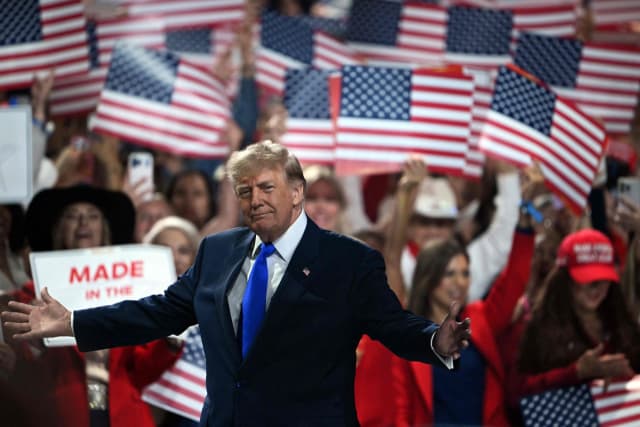
Before boarding for the Dallas convention, Trump told reporters the Iran war now has a schedule:
“I see the war ending right after the election. As soon as the election is over, the war will end. They have no strength left to hold out.”
He went further on the terms: “We will get a nuclear deal. That’s 99.9%. And many other issues that wouldn’t have been on the table three months ago will be on the table.” On oil prices — elevated since the war began — his answer was the same date: they will fall after the election, because Iran’s economy is broken by inflation and the US controls Hormuz.
What He Was Saying Three Weeks Ago
This site’s own archive is the counterpoint, so it can be stated precisely.
On August 21, Trump said he would fight this war “100 times over”, with no timeline and no negotiating framework. On August 22, he went further: “Iran desperately wants a deal, but we don’t even know if we want one — because I now see the Strait of Hormuz as US territory.” That statement removed the deal as an endpoint entirely. As recently as September 9, at the Dallas rally itself, he was floating another strike on Pickaxe Mountain.
Between August 22 and today, no battle was won, no talks were announced, no Iranian concession was made public. The thing that moved was the polling calendar.
The tell is the date itself. Wars end on military or diplomatic conditions — a front collapsing, a text agreed. This war’s announced end is pegged to a US election, and every claim in the statement bends toward that date: the war ends after the election, oil falls after the election, and Iran — Trump says — wants to influence the election. That is not an assessment of Tehran’s endurance. It is a campaign message engineered for war fatigue and pump prices, the two vulnerabilities his own convention is exposing: several swing-district Republicans reportedly chose to skip the Dallas gathering rather than share a stage with an unpopular war and its gas prices.
The Honest Case That He Might Be Right
The claim deserves its strongest version before the discount is applied.
Iran’s economy is genuinely under compound pressure: the “Economic D-Day” campaign, the UAE’s cutoff of what analysts called Iran’s economic lung, Hormuz transit at a third of pre-war volume, and inflation Tehran itself acknowledges. “They have no strength left to hold out” is an exaggeration of a real trajectory, not an invention. It is entirely possible that Iranian capitulation-by-exhaustion arrives within months, and that Trump is simply claiming the credit in advance and stapling the date to his election.
The problem is that both readings produce the same statement. A president who knows a deal is close and a president who needs voters to believe one is close say identical words. The Kharg Island episode established what markets already do with this channel: treat it as sentiment data, not event data, and wait for confirmation.
What Would Confirm It
The statement is checkable, which is its one analytically useful property. A real pre-negotiated endgame would leak through: back-channel meetings reported, Araghchi’s rhetoric softening, Hormuz transit quietly recovering beyond its current plateau, or Gulf intermediaries — Oman, Qatar — resurfacing in the wire reporting. None of that is visible yet.
For oil, this creates a dated binary that did not exist last week. If the market believes even partially, the war premium starts decaying into November — and the trade is asymmetric, because two very different paths lead through the same date: a genuine deal (premium collapses) or a pre-deal escalation to force terms — the Pickaxe Mountain option — which spikes prices before any settlement. Positioning for a smooth decay is the crowded mistake; the calendar pressure Trump has now created works in both directions, since a promised end-date he cannot deliver diplomatically raises the odds he attempts to deliver it militarily. The confirmations to watch, in order of reliability: Hormuz transit data, Gulf mediator activity, Iranian foreign ministry tone. And note the domestic tell — if swing-district Republicans keep their distance from the war through October, the pressure to end it, one way or the other, only grows.
The New Line
‘Right after the election, the war ends. They have no strength left.’
The Deal Odds
‘99.9%’ for a nuclear agreement, plus concessions ‘not on the table 3 months ago’
Three Weeks Ago
‘We don’t even know if we want a deal’ — Hormuz declared US territory
This Week
Pickaxe Mountain strike floated at the same Dallas convention
Oil, Per Trump
Prices fall after the election — same date as the war’s end
The Cracks
Swing-district Republicans reportedly skipping the convention