 Trump Signal Index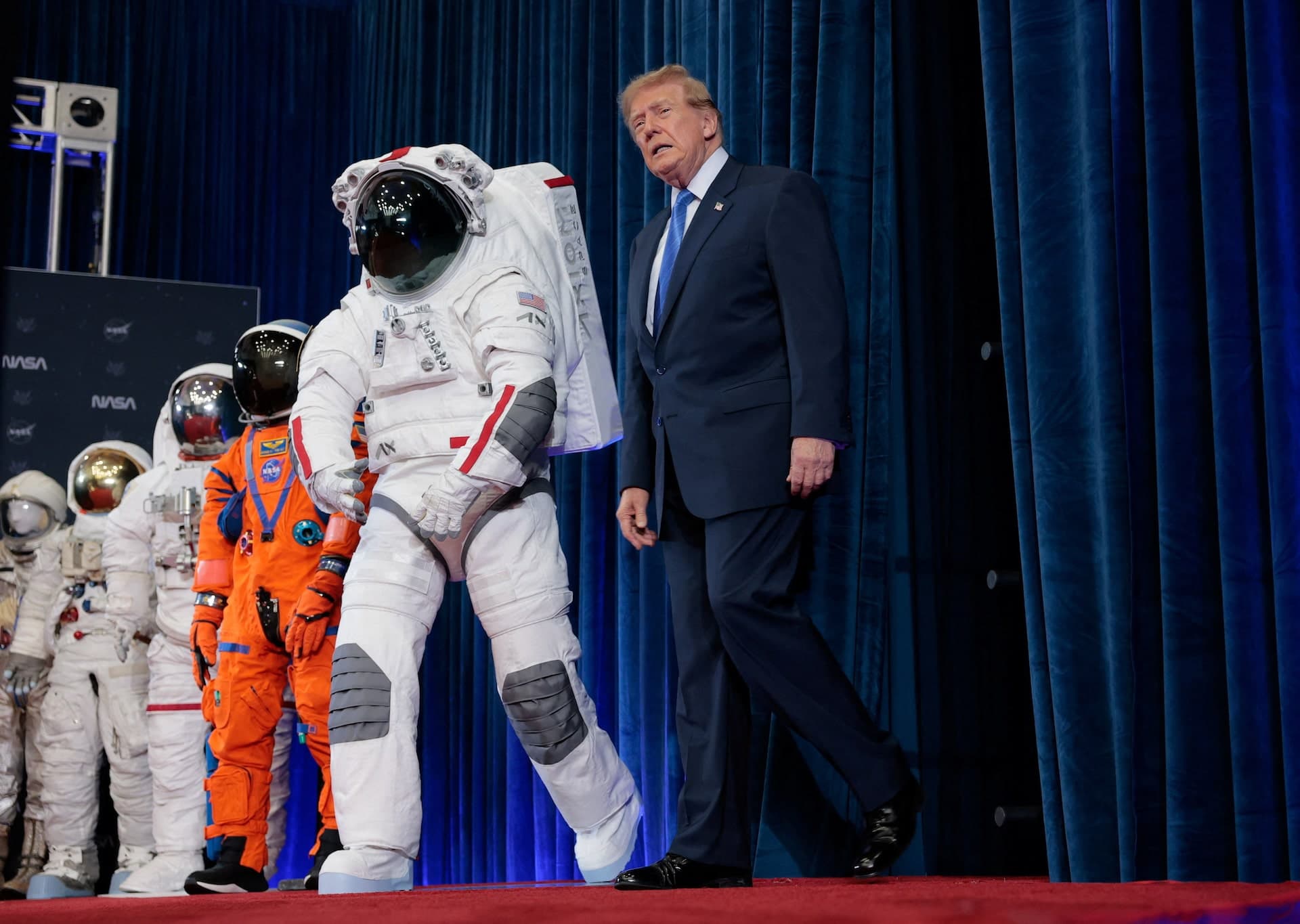
Trump signed an executive order on August 28 creating a US Space Academy — a dedicated service academy for space, on the model of West Point and Annapolis. The announcement came at NASA’s Lyndon B. Johnson Space Center in Houston.
“In my first term I created the Space Force, the sixth branch of the US military,” Trump said. “Today I’m making another historic announcement.”
The order establishes a presidential commission to deliver the academy’s key details — location, structure, curriculum — within 120 days. NASA Administrator Jared Isaacman chairs it; War Secretary Pete Hegseth and the Secretary of the Air Force sit on it.
The Revealing Detail: What Space Command Has Been Doing
The most substantive line in the speech was not about education. Trump said US Space Command supported two of the year’s defining military operations: the January ouster of Nicolás Maduro in Venezuela and the ongoing naval blockade of Iran around the Strait of Hormuz.
That is a presidential confirmation that space assets — surveillance, communications, targeting — are operationally embedded in both theaters. It also connects the academy announcement to the rest of the week: the Venezuela oil deal announced the same day rests on a government installed by the operation Space Command supported.
“Space is essential to our economy and our national security,” Trump said. “If you’re going to be second in space, you can’t be first on Earth.”
A service academy is a decades-long institutional commitment, not a press release. Academies produce commissioned officers on a pipeline that takes four years to yield its first class and decades to shape a service’s culture. Creating one for space signals that the administration treats military space not as a support function inside the Air Force’s orbit but as a permanent, first-tier warfighting domain with its own officer corps. The 120-day commission led by Isaacman — a private astronaut who flew commercial missions before running NASA — also points to the model: a pipeline feeding both the Space Force and the commercial space industry, blurring the military-civilian line by design. Trump’s own framing said exactly that: “skilled soldiers, engineers, and civilian operators.”
The Moon Promise
Trump awarded the Congressional Space Medal of Honor to the Artemis 2 crew, recently returned from their lunar flyby, and repeated his timeline commitment: US astronauts will return to the lunar surface before his term ends.
He went further than the standard Artemis language: the astronauts, he said, will plant a flag at the location of “the first permanent American settlement” on the Moon.
A permanent settlement claim carries treaty weight. The 1967 Outer Space Treaty — which the US ratified — prohibits national appropriation of celestial bodies. A US “settlement” site is defensible under the treaty as a base; the flag-planting-plus-permanence framing edges toward the territorial language Trump has already applied to Hormuz and Lake Ontario this month. The pattern of claiming domains — a strait, a lake, a lunar site — is consistent enough to be policy rather than rhetoric.
Near-term market impact is limited — an academy commission moves no revenue for years. The signal value is in procurement trajectory: a permanent officer pipeline locks in long-term Space Force budget growth, which flows to the defense-space complex (Lockheed Martin, Northrop Grumman, L3Harris, Boeing) and to launch and infrastructure providers (SpaceX above all, given Isaacman’s role and alignment). Watch the 120-day commission report for the academy’s scale and location — a large campus commitment would be the first budgetary tell. The strategic risk runs the other direction: presidential confirmation that space assets underpin operations in Venezuela and Hormuz gives Beijing and Moscow a documented rationale for their own military space acceleration, and the “permanent settlement” language invites a norms fight over the Outer Space Treaty just as lunar programs — American and Chinese — approach crewed landings.
Executive Order
US Space Academy created — service academy for the space domain
Commission
Chaired by NASA’s Jared Isaacman; Hegseth and Air Force Secretary on panel
Deadline
120 days to report location, structure, and curriculum
Operational Disclosure
Space Command supported the Maduro ouster and the Hormuz blockade
Moon Timeline
US astronauts on the lunar surface before Trump’s term ends
The Claim
Flag to be planted at ‘the first permanent American settlement’ on the Moon