 Trump Signal Index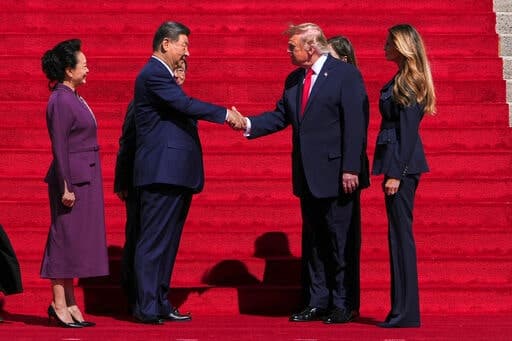
Yesterday’s post was about what the summit readouts left out. This one is about what went in.
The White House fact sheet, released September 25, has no line on Taiwan. It does have this one: the two leaders “recalled that the United States and China were allies in World War II and fought side by side to win the war.”
How the Line Got There
It started on the South Lawn. In his welcome for Xi on September 24, Trump called China a World War II ally. He cited the Flying Tigers, the American volunteer pilots who flew for China against Japan.
Xi picked it up at the state dinner the same night. “More than 80 years ago,” he said, “the peoples of our two countries stood shoulder to shoulder and fought against the Japanese militarist invaders. This friendship, forged in blood and fire, must be carried on from generation to generation.”
The next day, it was in the White House’s official summary.
Why Japan Noticed
The history is not in dispute. The United States and the Republic of China were allies against Japan. The choice to put it in a summit document in 2026 is a different matter.
Beijing has built its modern foreign-policy story around the war against Japan. It uses that story to keep Japan in the role of unrepentant aggressor and to question Japan’s place as America’s central ally in Asia. An American fact sheet that names China, not Japan, as the wartime ally gives that story a US signature.
Prime Minister Sanae Takaichi, who had already sought a meeting with Trump at the UN the day before Xi landed, got a call instead. She spoke with Trump for about 20 minutes on September 26 and briefed reporters at her official residence afterward.
They exchanged views on China-related issues, including the economy and security, she said, and confirmed US-Japan coordination. Then she answered the history directly: “There was a war between Japan and the United States, but afterward we firmly reconciled. We are now allies bound by very strong ties, and we can trust each other.”
Read the two omissions and the one inclusion together. The fact sheet left out Taiwan, the issue Japan cares most about in China policy. It left out any restatement of US security commitments in the region. It kept a line that aligns the US with China’s version of 20th-century Asia, in which Japan is the villain. None of that changes a treaty. But alliances run on signals, and Tokyo has now had three in one week: a summit it tried to get ahead of, a readout silent on Taiwan, and a history lesson that puts Japan on the other side. Takaichi’s “we reconciled firmly” is the language of an ally asking to be reassured in public. The next test is whether Washington gives that reassurance in its own words, not only in hers.
The Other Side
Invoking wartime alliances is standard summit courtesy. Presidents toast shared history with every visiting leader, and the Flying Tigers are a real point of pride in both countries. Trump took Takaichi’s call right after the summit, and she described it as confirming coordination, not as a complaint. Japan’s economic ties to the administration are also deep: Tokyo is a key investor in Trump’s industrial agenda, and the two governments intervened jointly to support the yen in August — a move Trump called “a signal of friendship.”
The market reading is about the region’s risk map, not a single trade. A US that describes China as a wartime ally while staying quiet on Taiwan is a US that Tokyo, Seoul, and Taipei will read as prioritizing a deal with Beijing. That tends to push Japan toward faster defense spending and more independent hedging, which is supportive for Japanese defense names over time and adds to the regional geopolitical premium. It also widens a gap China can work in. Watch for a US statement reaffirming the Japan alliance in its own voice — a Treasury or State readout of the Takaichi call, or a line on the Senkakus. Silence there would confirm the drift. A clear reaffirmation would close the story.
In the Fact Sheet
US and China ‘were allies in World War II and fought side by side’
Not in the Fact Sheet
Taiwan
Trump
Called China a WWII ally; cited the Flying Tigers
Xi
Friendship ‘forged in blood and fire’ against ‘Japanese militarist invaders’
Takaichi
20-minute call; ‘we had a war, but reconciled firmly’
Watch
A US reaffirmation of the Japan alliance in its own words