 Trump Signal Index
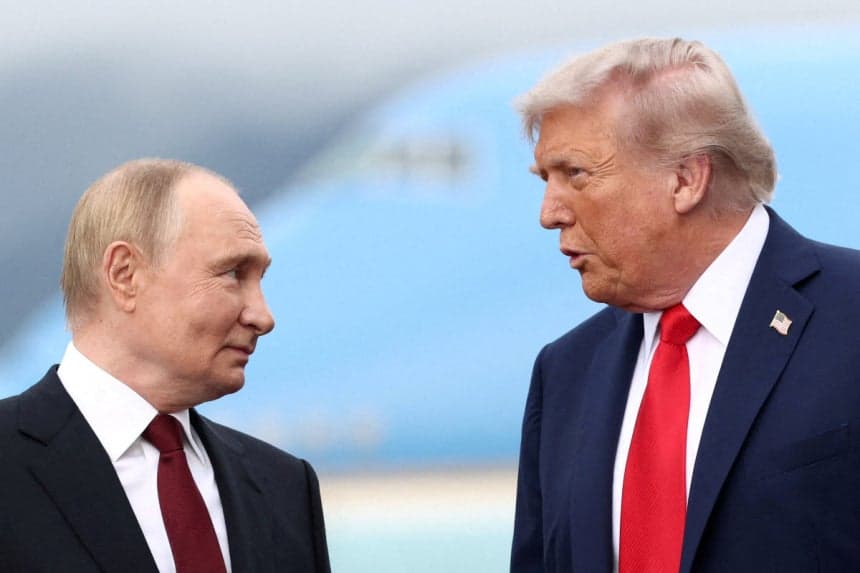
The US and Russia are discussing reviving energy joint ventures between their companies after the war, as part of the Ukraine peace talks, the Financial Times reported on October 27. The idea is to show Vladimir Putin what Russia stands to gain economically if he agrees to end the war.
Trump’s envoy Steve Witkoff discussed the ideas with Putin in St. Petersburg early last month, according to the report.
What’s on the Table
- Oil: Restart the US-Russian oil venture in the waters off Sakhalin, in Russia’s Far East. Resume Russian crude exports to Europe through the Druzhba pipeline, with US oil companies taking part. Sell Lukoil’s foreign assets to US investors.
- Gas: Use what remains of Nord Stream, mostly destroyed by explosions in 2022, to send Russian gas back to Europe. Bring Novatek, Russia’s largest LNG producer, into the Alaska LNG project.
- Nuclear: Hand operation of the Zaporizhzhia nuclear plant, Europe’s largest and occupied by Russia since 2022, to the US side, with its power split between Ukraine and Russia.
- Aviation: Let US airlines fly over Russia again, and cooperate on producing and supplying titanium for aircraft.
A US official told the FT that Trump’s team has discussed economic offers with both sides: postwar investment and growth for Ukraine, economic cooperation for Russia.
The US position is that any of these projects must be part of a comprehensive peace agreement, and can start only after the war ends. Nothing has been agreed.
The Obstacles
- Putin: It is unclear whether he will move from his hard line in the talks.
- US companies: ExxonMobil, which took part in the Sakhalin project, is negotiating compensation for the 30% stake Russia seized. It has not said it plans to go back.
- Europe: European governments oppose easing sanctions on Russia or resuming economic ties before the war ends. One European diplomat told the FT that economic rewards alone are unlikely to bring Putin to a deal, because Russia’s war aims go beyond money.
Alaska’s Alternative, With a Russian Partner
On October 17, Alaska Senator Dan Sullivan answered the Russian diesel deal by saying the US should expand Alaska’s energy production instead. Trump has been promoting Alaska LNG since September, most recently with Korean and Taiwanese money for the project.
The FT’s list puts Novatek into that same project. The alternative to Russian energy would have a Russian partner.
Russia policy this month has run on energy. First came the Russian diesel license, then the “ENERGY CEASEFIRE,” then the Graham sanctions waiver, when Kirill Dmitriev said US-Russian economic dialogue would continue. Those moves were about US fuel prices before November 3. This one is about who owns Russia’s energy flows after the war, with American companies in the middle. The weakness is that Washington does not control most of what it is offering. Druzhba and Nord Stream end in Europe, and Europe decides whether to buy. Sakhalin needs ExxonMobil, which has not said it wants to return. Zaporizhzhia sits near the front line. The offer can show Putin a reward. Delivering it depends on governments and companies that have not agreed.
The Other Side
Economic incentives are a normal part of ending wars, and a peace that pays gives Russia a stake in keeping it. The offers go to both sides, with postwar investment for Ukraine as well. Everything is conditional on a comprehensive deal and on the war ending first, so nothing is handed over in advance. A US operator at Zaporizhzhia could make Europe’s largest nuclear plant safer than it has been under occupation. And if talks fail, the offers cost nothing.
For markets, this is a long-dated signal, not a near-term supply change. Nothing moves until the war ends. But each item would matter if it happened. Russian gas through Nord Stream would push down European gas prices and compete with US LNG in Europe. Druzhba crude to Europe would narrow the discount on Russian oil. Overflight rights would shorten Asia routes for US airlines, and titanium supply touches aircraft makers. Today, markets price these at close to zero, so any credible step toward a framework could move European gas and Russia-linked assets quickly. Watch Europe’s response, the Kremlin’s answer, Zelensky’s view of a US-run Zaporizhzhia, and whether any of this appears in a written peace framework.
The Report (FT, Oct 27)
US and Russia discuss postwar energy joint ventures as part of peace talks
Oil
Sakhalin venture; Druzhba crude to Europe; Lukoil foreign assets to US investors
Gas
What remains of Nord Stream; Novatek in Alaska LNG
Nuclear
US side runs Zaporizhzhia; power split between Ukraine and Russia
Condition
Only in a comprehensive peace deal, only after the war ends
Obstacles
Putin’s hard line; ExxonMobil not committed; Europe opposed