 Trump Signal Index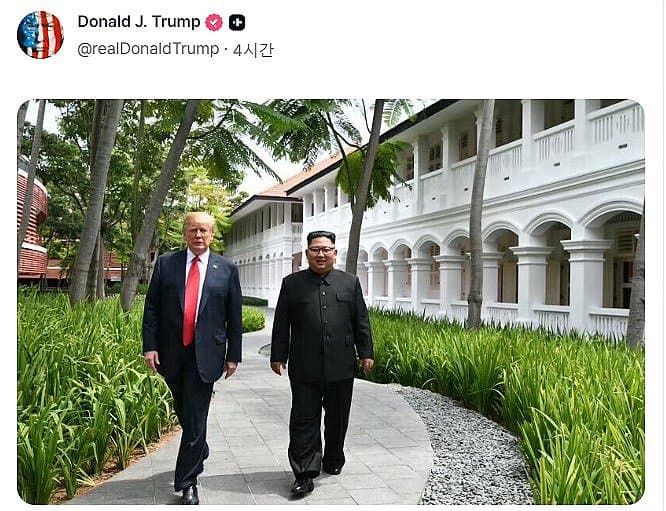
The question at the White House on September 29 was simple. Iran cannot have nuclear weapons. Why can North Korea?
“That’s an interesting question,” Trump said. “You know why? There were other presidents.” They could have stopped him, he said.
Then he talked about Kim Jong-un.
“Kim Jong-un is my friend. He likes Trump. He doesn’t like other people. He likes almost nobody in the world but me, and I like him,” Trump said. “I get criticized a lot when I say that. People say it’s terrible. But he really has nuclear capability. Pretty substantial nuclear capability. Not as much as us, but he has it.”
As long as he is in office, Trump said, North Korea will not be a problem. “He’ll be fine while I’m here. You know why? Because he respects me and he likes me.”
Two Standards, One Afternoon
The contrast is the story.
- Iran: The US has fought a war since February and blockaded the Strait of Hormuz to stop Iran from building a bomb. Three days ago Trump rejected Iran’s seven-day offer and said he is “always thinking” about resuming strikes.
- North Korea: An arsenal Trump describes as “pretty substantial,” a leader he calls a friend, and a relationship he says depends on mutual respect between two men.
Trump’s explanation for the difference is timing and people. North Korea got its weapons under other presidents. Iran is trying under him.
This is not a new position so much as a completed one. Trump spoke of North Korea as a “nuclear power” on his first day back in office in January 2025. Last month he said it has “57 very powerful nuclear weapons.” On September 1 the White House said he is open to talks with Kim “without any preconditions” and left out the word “denuclearization.” In June, after the Iran memorandum, Trump had called North Korea’s denuclearization the next priority. That word has not come back.
The message to every would-be nuclear state is that the bomb is the price of admission to a friendship. North Korea, which built its arsenal and survived the pressure, is now described by an American president as a peer with “substantial” capability and a leader who deserves respect. Iran, which does not yet have a weapon, faces a blockade and a president “always thinking” about bombing. Saudi Arabia, which Trump is helping toward uranium enrichment, is watching both. Nonproliferation has always rested on the idea that getting the bomb makes a country less safe, not more. Trump’s answer on September 29 argues the opposite, and it came from the podium of the country that wrote the treaty.
What Comes Next: Shenzhen
Trump said last month he wants to meet Kim again this year. He has pushed aides to arrange a meeting around the APEC summit in Shenzhen on November 18–19. North Korea reportedly came up in his September 24 summit with Xi Jinping. Some observers expect a Trump–Kim meeting on the sidelines of APEC.
Pyongyang has been cold so far, even after Trump scaled back joint drills with South Korea. A public “he is my friend” and an acknowledgment of Kim’s arsenal are exactly the concessions Pyongyang has sought before sitting down: recognition as a nuclear state, not a target for disarmament.
The Case for the Other Reading
Trump’s supporters would say this is realism, not concession. North Korea does have the weapons; pretending otherwise has not worked for thirty years. A personal channel with Kim kept the peninsula quiet during Trump’s first term, and talking to an adversary is not the same as endorsing its arsenal. On Iran, the argument runs, the point is to stop a program before it produces a bomb, which is exactly what failed with North Korea. The two policies can be read as consistent: prevent where possible, manage where too late.
The market reading is regional. Seoul and Tokyo now hear an American president describe North Korea as a settled nuclear power and treat the relationship as personal, while US drills are reduced and a summit is sought without a denuclearization goal. That raises the odds of faster defense spending in South Korea and Japan — supportive for regional defense contractors — and adds to the case for their own deterrence debates, which were already live after last week’s World War II line in the summit fact sheet. A Trump–Kim meeting in Shenzhen would be headline-positive for Korean risk assets in the short run, but a deal that trades recognition for a freeze would reprice the peninsula’s long-term security. Watch for any US statement that restores the word “denuclearization” before November. Its absence is the policy.
The Question
Iran can’t have nukes — why can North Korea?
Trump’s Answer
‘There were other presidents. They could have stopped him.’
On Kim
‘My friend … he likes almost nobody in the world but me’
On the Arsenal
‘Pretty substantial nuclear capability. Not as much as us’
The Guarantee
‘He’ll be fine while I’m here … he respects me’
Next
Possible Trump–Kim meeting at APEC Shenzhen, Nov 18–19